
Multiple Myeloma: « 20 » and « 100 » Ratios Cut-off applicable to Sebia FLC assays
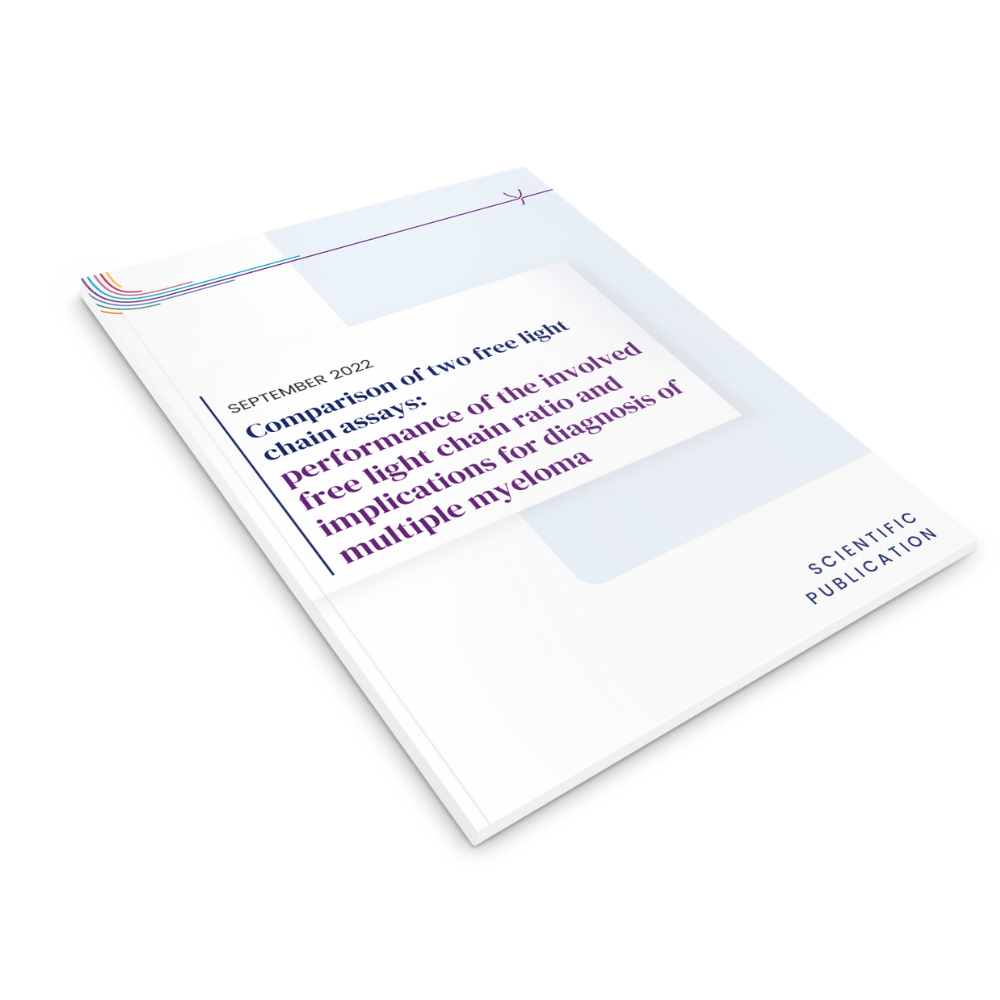
The « 20 » and « 100 » Ratios Cut-off are respectively used in routine for high-risk smoldering multiple myeloma stratification and for assessing progression to active multiple myeloma or amyloidosis. This publication shows that such cut-off are applicable to the Sebia FLC assays.

In 2014, the IMWG has added SLiM criteria (bone marrow plasmacytosis ≥ 60%, FLC i/u ≥100 along with the iFLC ≥ 100 mg/L, > 1 focal lesion on MRI) to the CRAB criteria (calcium elevation, renal insufficiency, anemia), as Myeloma Defining Events.
The iFLCr threshold (100) was defined because it was the cut-off associated with a 79% risk of progression to MM (Multiple Myeloma) or AL (AL amyloidosis) within 24 months, and with a specificity of 97% (Larsen JT et al, Leukemia, 2013).
In addition to this 100 ratio, the IMWG has then introduced the 20-20-20 system for assessing the Smoldering Multiple Myeloma (SMM) to MM progression. In that system, a patient with SMM receives 1 risk point for each of the following (M-spike>20 g/L, iFLCr>20 and BMPC>20%). This score is notably used for trial stratification and eligibility.
This publication indicates that the FLC cut-points can be used with Sebia ELISA FLC tests and allow for comparability within the field, to ensure an appropriate patient management.
Test associated with this resource
Related instrument
This section contains information intended for wide distribution and may therefore contain product details or information that is not available or valid in your country. Please contact your local Sebia representative. Information intended for healthcare professionals. Carefully read the instructions in the reagent package inserts and instrument manuals.