Fully automated testing
for qualitative or quantitative analysis with fast serum protein separation and good resolution.

High throughput Serum Protein Electrophoresis, with high resolution results.

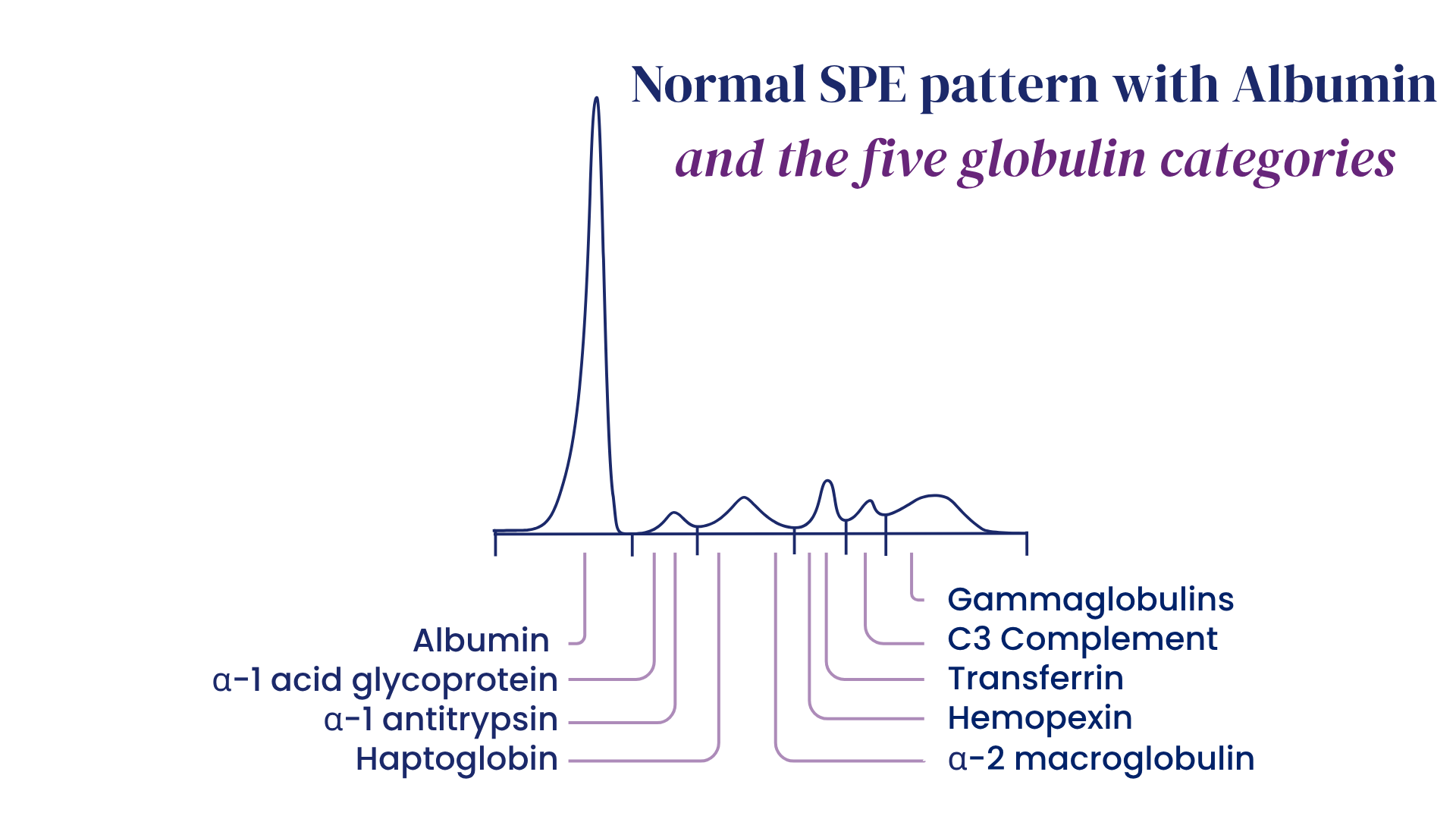
Serum Protein Electrophoresis is a well-established technique routinely used in clinical laboratories to screen samples to detect protein abnormalities as monoclonal gammopathies (Multiple Myeloma, MGUS, Waldenström disease).
for qualitative or quantitative analysis with fast serum protein separation and good resolution.
for quick screening and identification of abnormal patterns.
CAPI 3 PROTEIN(E) 6 kit enables the separation into six major fractions: Albumin, Alpha-1, Alpha-2, Beta-1, Beta-2, Gamma.
Valley to valley or Baseline to top.
Serum Proteins are separated in silica capillaries by their electrophoretic mobility and the electroosmotic flow at high voltage in an alkaline buffer. Proteins are directly detected during migration by UV absorbance at 200 nm and quantified by the peak quantification tool.
Serum
Sensitivity
Large autonomy
Throughput (tests/hour)*
PROTEIN(E) 6
IMMUNOTYPING
*Firmware-dependent; contact your local Sebia representative for current information.
**Maximum Capacity or MC designation refers to Tube Loader CAPILLARYS 3 - P/N: 1249 and Rack Conveyor CAPILLARYS 3 - P/N: 1250 associated with CAPILLARYS 3 TERA - P/N: 1246.
Educational Webinar with Dr. Ilaria Ferrarotti

Educational Webinar with Dr. Julien GUILLEMAUD

Educational Webinar with Pr Simone Scarlata

Capillary Electrophoresis solution to meet your high capacity needs.
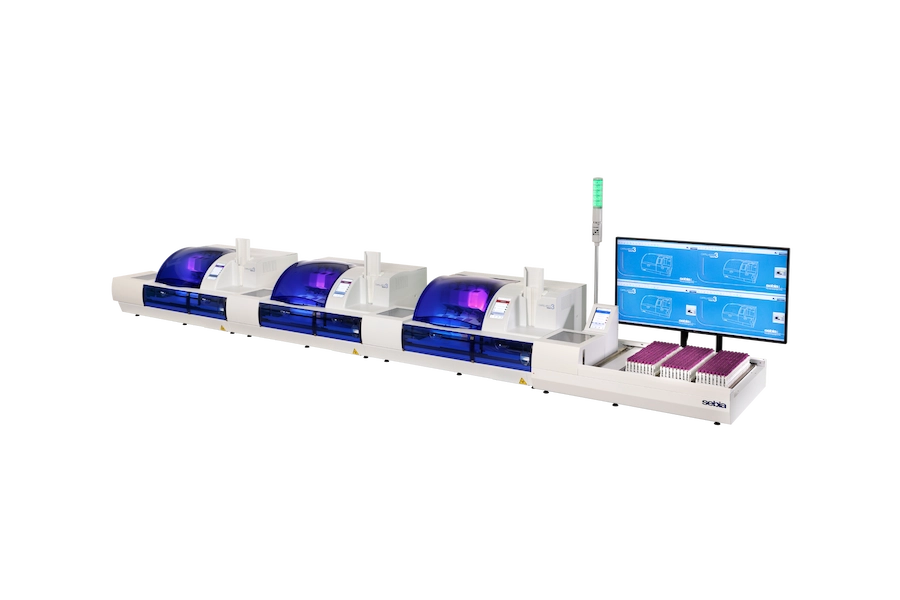
A concentrate of Sebia’s expertise in a high throughput instrument.
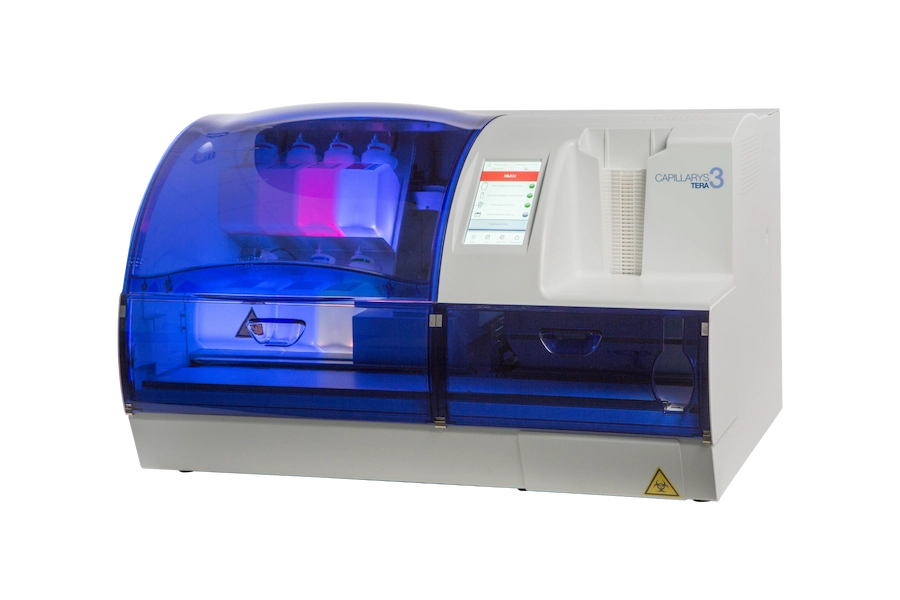
Evolution makes the difference.
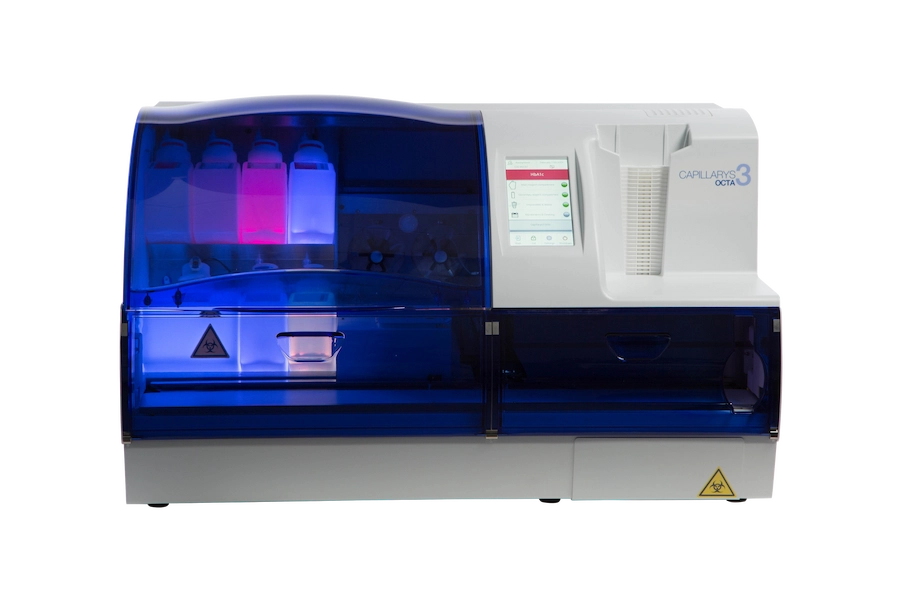
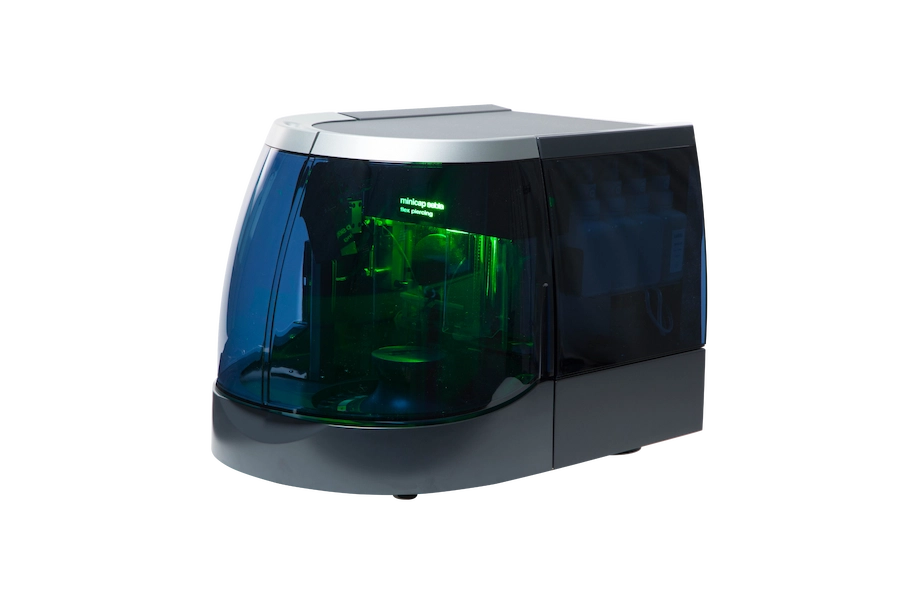
The compact and affordable automation of Capillary Electrophoresis.
This section contains information intended for wide distribution and may therefore contain product details or information that is not available or valid in your country. Please contact your local Sebia representative. Information intended for healthcare professionals. Carefully read the instructions in the reagent package inserts and instrument manuals.