The Role of CSF in Multiple Sclerosis Diagnosis
Understand how cerebrospinal fluid (CSF) analysis helps support the diagnosis of Multiple Sclerosis and differentiate it from other neurological disorders.

This webinar is presented in English.

This webinar aims to elucidate the fundamental role of cerebrospinal fluid (CSF) as a diagnostic tool in differentiating Multiple Sclerosis (MS) from other neurological disorders.
In recent years, diagnostic criteria for MS have evolved to enable earlier diagnosis and facilitate timely interventions. However, diagnosing MS remains challenging due to the high prevalence of conditions that mimic MS clinically and radiologically.
This webinar will delve into the specific components of CSF, with a particular focus on oligoclonal bands and free kappa light chains, and their correlation with the underlying pathophysiology of the disease. The ultimate goal is to gain a deeper understanding of how CSF analysis contributes to the differential diagnosis and management of MS.
Understand how cerebrospinal fluid (CSF) analysis helps support the diagnosis of Multiple Sclerosis and differentiate it from other neurological disorders.
Explore the evolution of MS diagnostic criteria and their impact on earlier diagnosis and timely patient management.
Learn about the conditions that can resemble MS clinically and radiologically, and the challenges they pose in the diagnostic process.
Discover the significance of these key CSF biomarkers and their contribution to improving diagnostic accuracy.
Gain insight into how CSF findings reflect disease pathophysiology and support differential diagnosis and clinical decision-making.
OCB detection demonstrates high diagnostic sensitivity and remains the gold standard
Maria Di Cristinzi is a neurologist with expertise in Multiple Sclerosis (MS).
She completed her medical degree at San Raffaele Vita-Salute University in Milan in Italy. Subsequently, she attended a residency in Neurology at the University of Florence, where she is currently pursuing a PhD in Neuroscience. Her research grant is focusing on the impact of disease-modifying treatments on the immune system in MS.
Dr. Di Cristinzi’s research special interests include the pathophysiology of MS, and the clinical and MRI evaluation of disease modifying treatment.

Educational Webinar with M. Jean Deenmamode, IFCC Working Group Chair

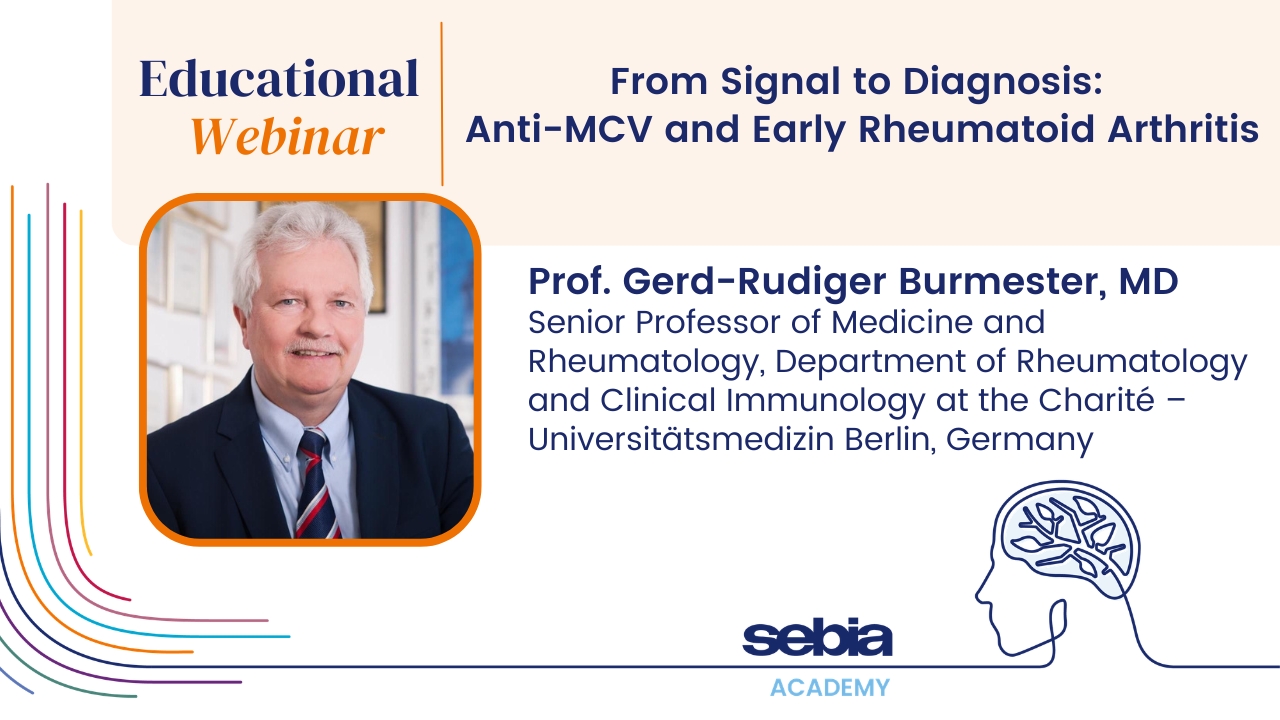
Educational Webinar with Gerd-Rüdiger Burmester, MD & Roberto Fiorillo
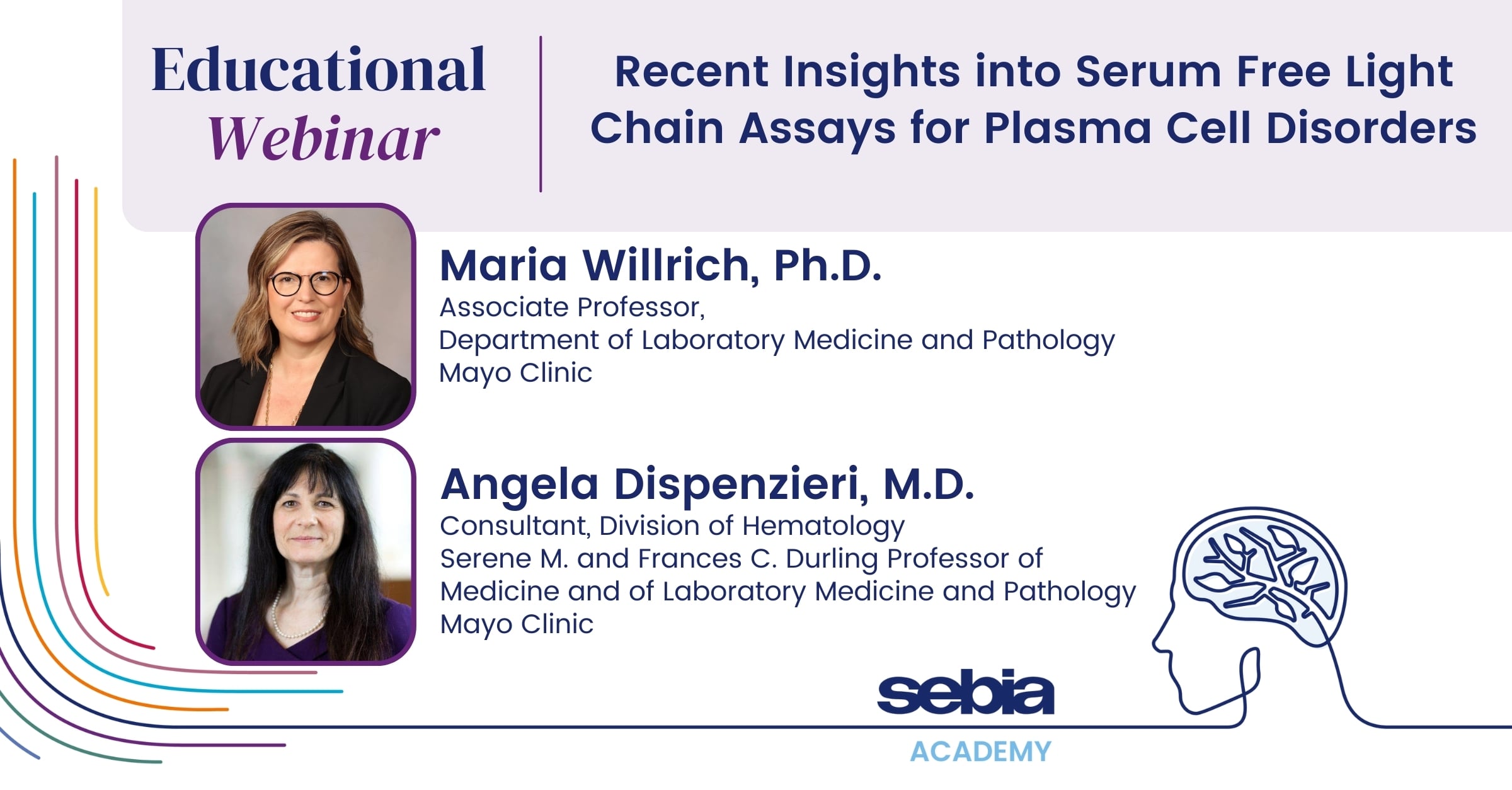
Educational Webinar with Dr. Maria Willrich & Dr. Angela Dispenzieri
This section contains information intended for wide distribution and may therefore contain product details or information that is not available or valid in your country. Please contact your local Sebia representative. Information intended for healthcare professionals. Carefully read the instructions in the reagent package inserts and instrument manuals.