Understand the role of sFLC assays in plasma cell disorders
Learn how serum free light chain testing supports the diagnosis, risk assessment, and monitoring of multiple myeloma, MGUS, smoldering myeloma, and amyloidosis.

This webinar is presented in English.

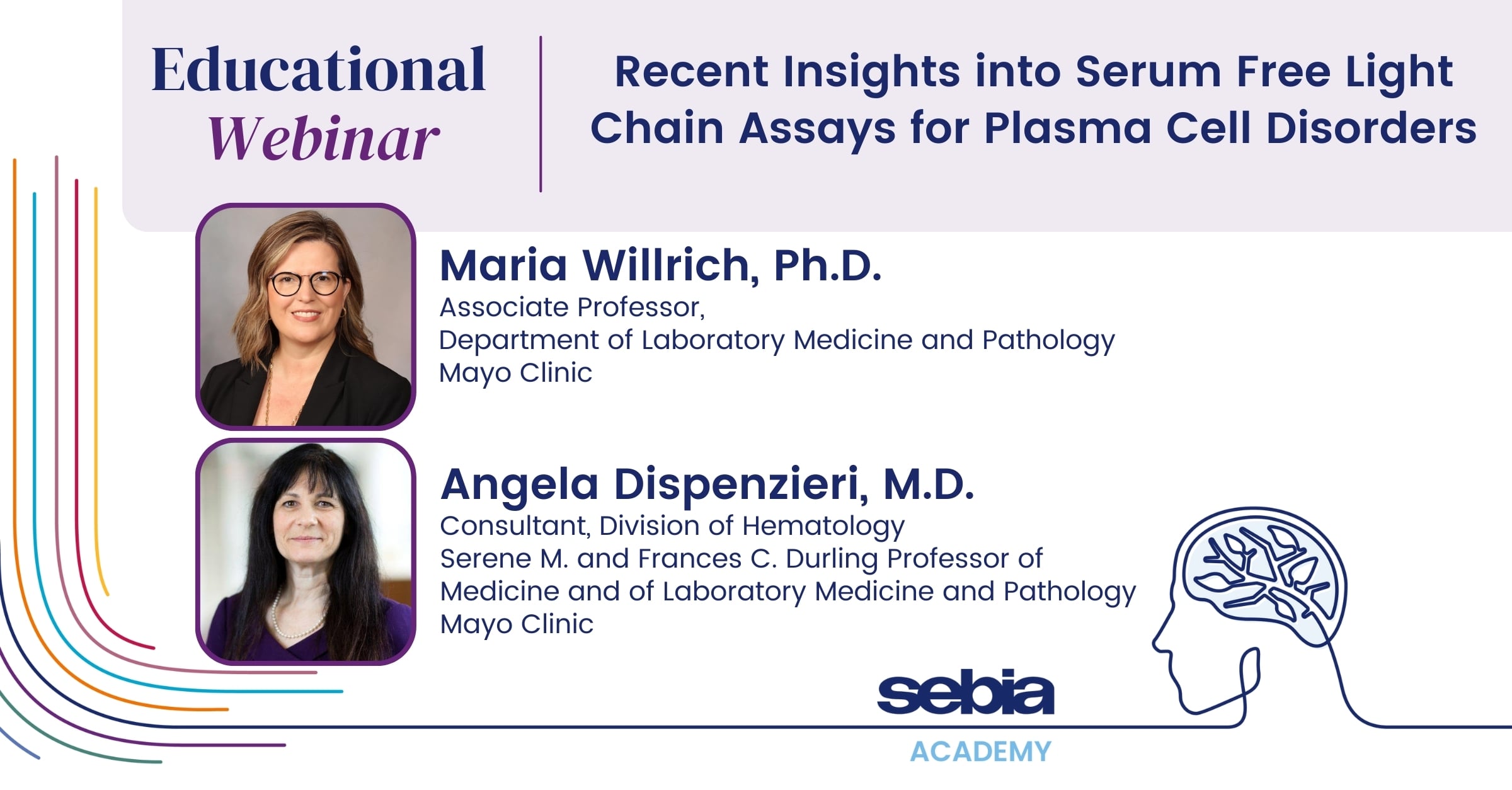
Serum free light chain (sFLC) tests have advanced the prediction, diagnosis, and monitoring of plasma cell disorders. This webinar features two leading experts who will compare the performance of sFLC assays in the contexts of Multiple Myeloma, including its precursors such as MGUS and smoldering myeloma, and Amyloidosis. With the introduction of updated guidelines for monoclonal gammopathies and a new, 2023 consensus for cardiac amyloidosis, attendees will gain valuable insights into the interchangeability of assay platforms and key considerations for optimizing testing triage. The discussion will also address reference intervals, method selection, and strategies to enhance assay specificity for improved testing accuracy.
Learn how serum free light chain testing supports the diagnosis, risk assessment, and monitoring of multiple myeloma, MGUS, smoldering myeloma, and amyloidosis.
Explore differences between sFLC methodologies, reference intervals, and assay performance, along with the clinical implications of platform interchangeability.
Discover how sFLC results contribute to testing algorithms for monoclonal gammopathies and the 2023 American College of Cardiology consensus on cardiac amyloidosis.
The use of similar medical decision points would be of great benefit to clinicians ordering and interpreting assays
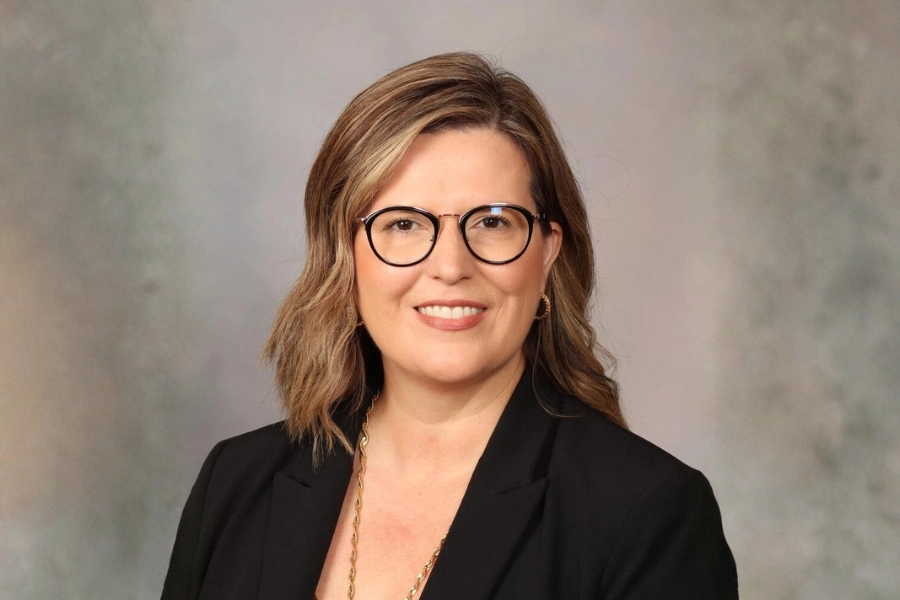
Dr. Maria Willrich is an Associate Professor of Laboratory Medicine and Pathology at Mayo Clinic and a consultant in the Protein and Immunology Laboratory within the Department of Laboratory Medicine and Pathology. Her work focuses on clinical immunology, protein analysis, and the development and evaluation of laboratory tests used in the diagnosis and monitoring of plasma cell disorders and immune-mediated diseases.
Dr. Willrich has extensive expertise in serum free light chain testing, monoclonal gammopathies, multiple myeloma, and amyloidosis diagnostics. Her research has contributed to the understanding of assay standardization, reference interval optimization, and the clinical interpretation of laboratory biomarkers. Through her scientific publications, collaborative research, and educational activities, she helps advance evidence-based laboratory medicine and improve diagnostic accuracy for patients with hematologic disorders.
Dr. Angela Dispenzieri is a Professor of Medicine and Laboratory Medicine & Pathology at Mayo Clinic and an internationally recognized expert in plasma cell disorders, amyloidosis, monoclonal gammopathies, and multiple myeloma. She is a consultant in the Division of Hematology and has dedicated her career to improving the diagnosis, risk stratification, and treatment of patients with plasma cell and immunoglobulin-related diseases.
A leading researcher in the field of AL amyloidosis and monoclonal gammopathies, Dr. Dispenzieri has authored hundreds of peer-reviewed publications and has played a key role in developing clinical guidelines and diagnostic criteria for plasma cell disorders. Her work has significantly advanced the understanding of monoclonal protein testing, serum free light chain assays, and non-invasive diagnostic approaches for amyloidosis. Through her research, clinical practice, and educational activities, she continues to contribute to the advancement of hematology and laboratory medicine worldwide.

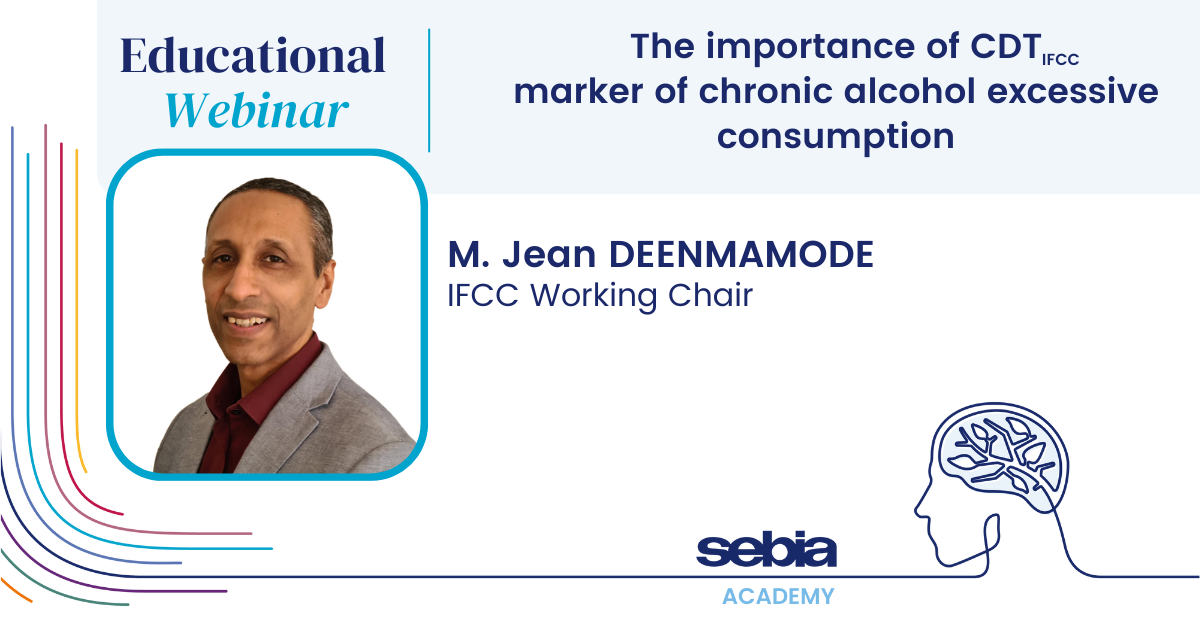
Educational Webinar with M. Jean Deenmamode, IFCC Working Group Chair
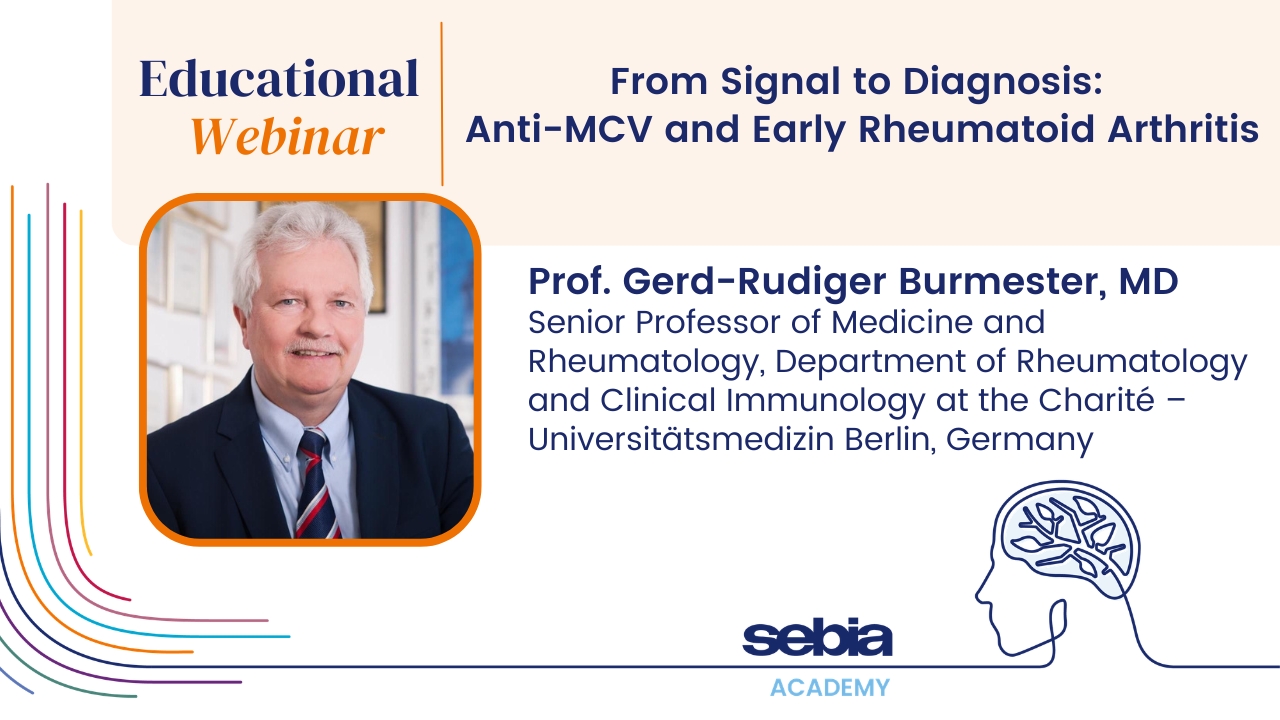
Educational Webinar with Gerd-Rüdiger Burmester, MD & Roberto Fiorillo
Educational Webinar with Dr. Maria Willrich & Dr. Angela Dispenzieri
This section contains information intended for wide distribution and may therefore contain product details or information that is not available or valid in your country. Please contact your local Sebia representative. Information intended for healthcare professionals. Carefully read the instructions in the reagent package inserts and instrument manuals.