Identifying Normal and Abnormal Electrophoretic Profiles
Learn how to evaluate electrophoretic patterns based on peak number, migration position, and hemoglobin fraction percentages to distinguish normal from abnormal results.

This webinar is presented in English.

Capillary Electrophoresis is one of the newer methods for the detection and evaluation of hemoglobinopathies. It improves upon the alkaline gel electrophoresis platform with a similar migration order, but sharper resolution, better quantitation, and tightly controlled migration such that individual variants can be distinguished from one another by small differences in presentation or migration position. However, it is one of several components of a standard hemoglobinopathy workup. Evaluation of the electrophoretic pattern in the context of confirmatory testing, CBC values, iron studies, peripheral blood smears, and patient history can provide surprising detail and insight into a patient’s diagnosis and clinical condition. The following presentation will demonstrate this through carefully selected clinical cases wherein slight (and in some cases large) deviations from a normal electrophoretic profile are given greater meaning through consideration of the whole patient chart.
Learn how to evaluate electrophoretic patterns based on peak number, migration position, and hemoglobin fraction percentages to distinguish normal from abnormal results.
Discover how subtle variations in electrophoretic profiles can indicate underlying hemoglobinopathies or other clinically relevant conditions.
Understand why electrophoretic results should be interpreted alongside hematology parameters, confirmatory testing, and patient history to achieve an accurate diagnosis.
An electrophoretic pattern must be assessed in light of all available clinical testing
Dr. Mark R. Girton is a Clinical Assistant Professor in the Department of Pathology at the University of Michigan, where he practices hematopathology and clinical chemistry and serves as Technical Supervisor and Clinical Consultant for the Clinical Hematology Laboratory.
He completed his anatomic and clinical pathology training, followed by fellowships in hematopathology and clinical chemistry at the University of Virginia. His professional interests include medical education, hemoglobinopathies, lymphoproliferative disease, artificial intelligence in laboratory medicine, and laboratory stewardship.

Dr. Matthew C. Wagner is a Scientific Affairs Specialist at Sebia, Inc.
He earned his undergraduate degree in Chemistry from Emory University and completed his PhD at Georgia Institute of Technology, where he researched microfluidics and ligand attachment in the propagation of pain crisis in sickle cell anemia. Following postdoctoral studies in lung dysfunction, he joined Sebia and became part of the Medical and Scientific Affairs group.
In this role, Dr. Wagner presents and publishes on educational topics including hemoglobinopathies, HbA1c, serum electrophoresis, serum free light chains, multiple myeloma diagnostics, and other applications related to electrophoresis.

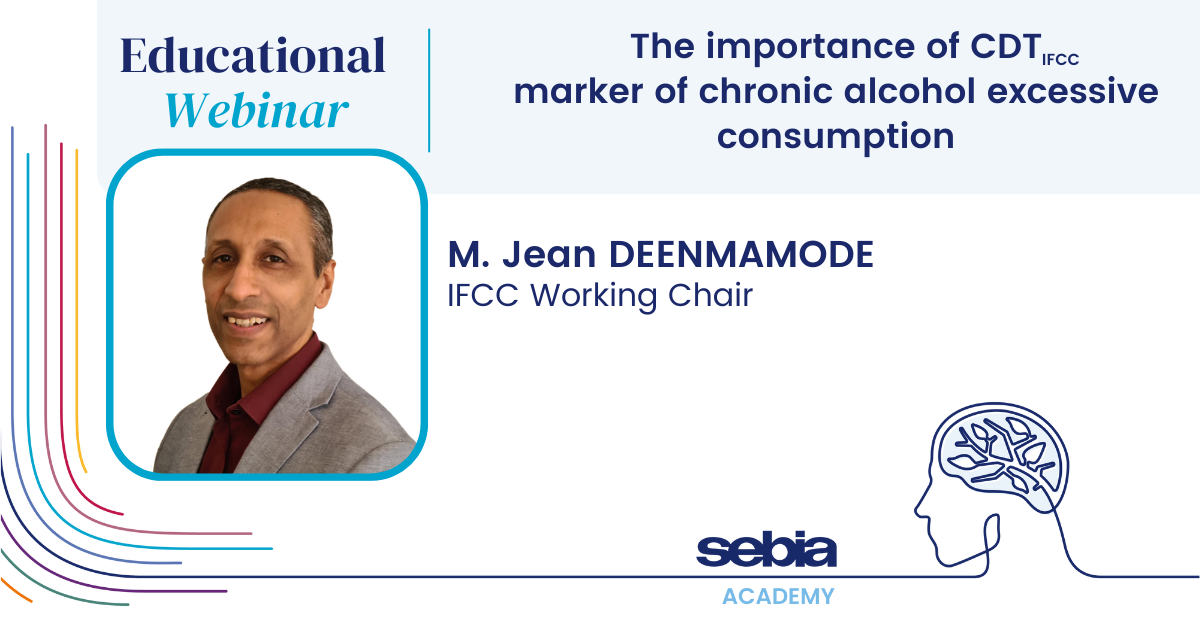
Educational Webinar with M. Jean Deenmamode, IFCC Working Group Chair
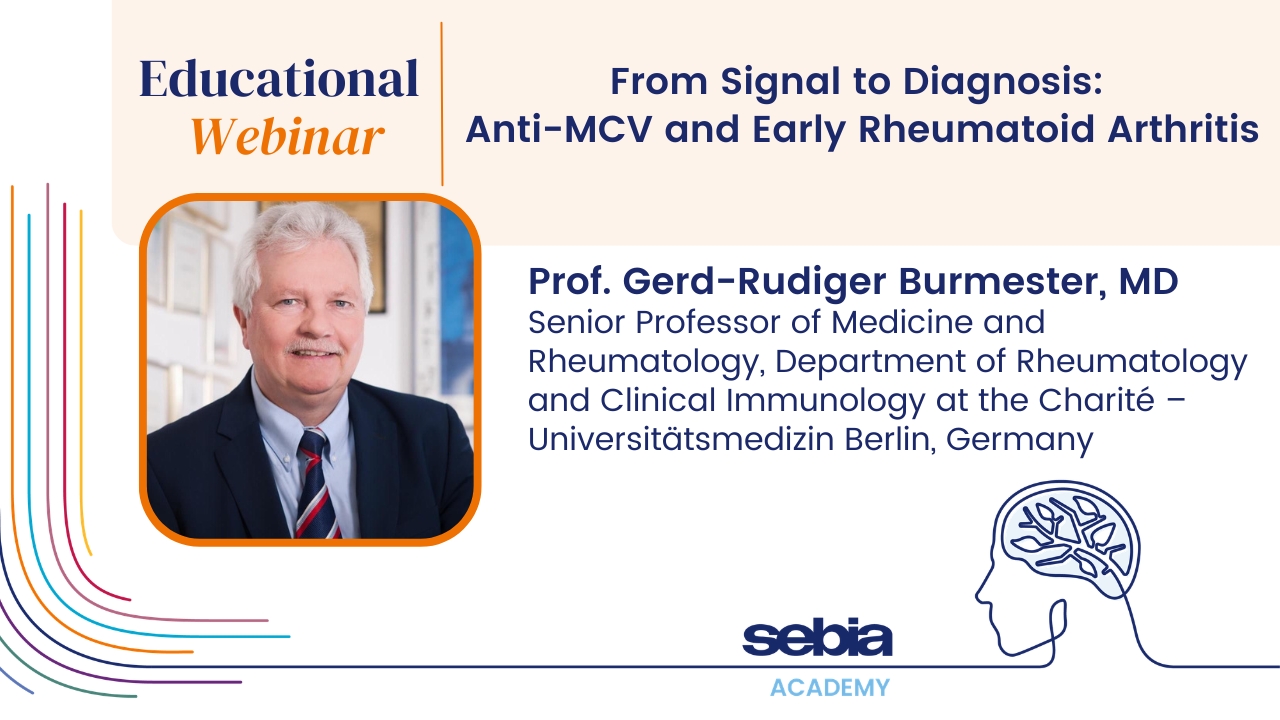
Educational Webinar with Gerd-Rüdiger Burmester, MD & Roberto Fiorillo
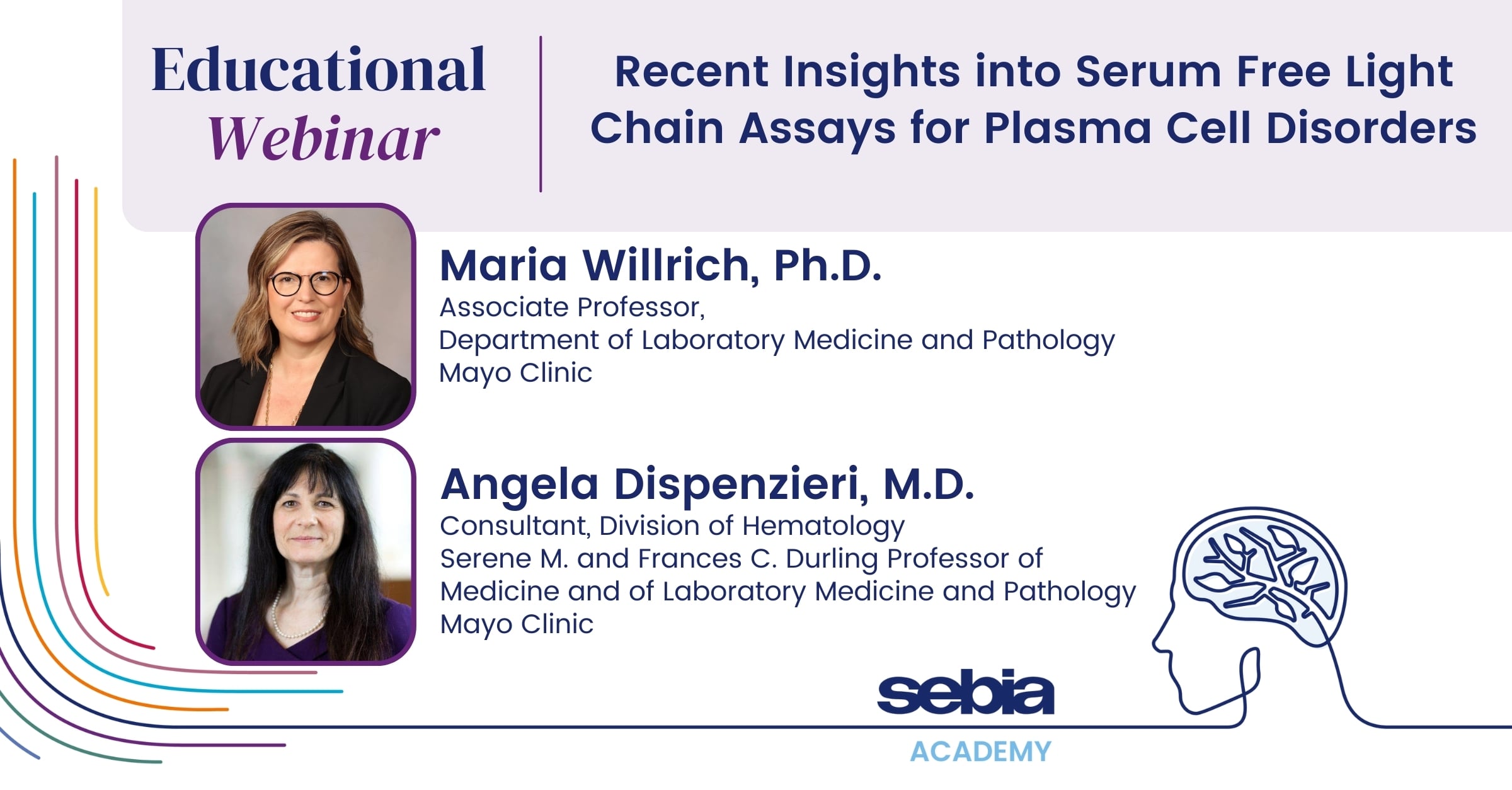
Educational Webinar with Dr. Maria Willrich & Dr. Angela Dispenzieri
This section contains information intended for wide distribution and may therefore contain product details or information that is not available or valid in your country. Please contact your local Sebia representative. Information intended for healthcare professionals. Carefully read the instructions in the reagent package inserts and instrument manuals.