Understand the role of Free Light Chains (FLC) in plasma cell disorders
Learn how FLC testing supports the diagnosis and monitoring of multiple myeloma and AL amyloidosis alongside serum protein electrophoresis and immunofixation/immunotyping.

This webinar is presented in English.

Measurement of serum free light chains (FLC) is an important part of the diagnosis of monoclonal gammopathies.
Together with serum protein electrophoresis and immunofixation/immunotyping, FLC measurement is part of international guidelines, notably for the aid of diagnosis and monitoring of patients with multiple myeloma. FLC testing is also used for the aid of diagnosis and monitoring of patients with AL Amyloidosis.
This workshop recorded during the 25th WorldLab / EuromedLab (2023) focuses on the clinical use of Free Light Chains for Multiple Myeloma and AL Amyloidosis.
Pr. Palladini reviews the different international guidelines and recommendations about FLC testing and reminds the cut-off commutability (« 20 » and « 100 » ratios) between Sebia assay and a predicate method, recently published by Willrich M.A.V et al., in 2022.
Learn how FLC testing supports the diagnosis and monitoring of multiple myeloma and AL amyloidosis alongside serum protein electrophoresis and immunofixation/immunotyping.
Explore the current recommendations for FLC measurement and the clinical significance of key kappa/lambda ratio thresholds used in patient management.
Understand the commutability of important clinical cut-offs, including the “20” and “100” ratios, and their application when using Sebia FLC assays and predicate methods.
The free light chain level is a strong predictor of outcome
Dr. Palladini is professor of clinical chemistry at the University of Pavia and the acting director of the Amyloidosis Research and Treatment Center at the Foundation “IRCCS Policlinico San Matteo”, Pavia, Italy
Dr. Palladini contributed to the introduction of novel agents in the treatment of AL amyloidosis. His studies led to the development of several treatment regimens for AL amyloidosis and to the introduction of NT-proBNP as a marker of diagnosis, prognosis and response of cardiac involvement in this disease, and to the establishment and validation of criteria for hematologic and organ response to therapy in AL amyloidosis.

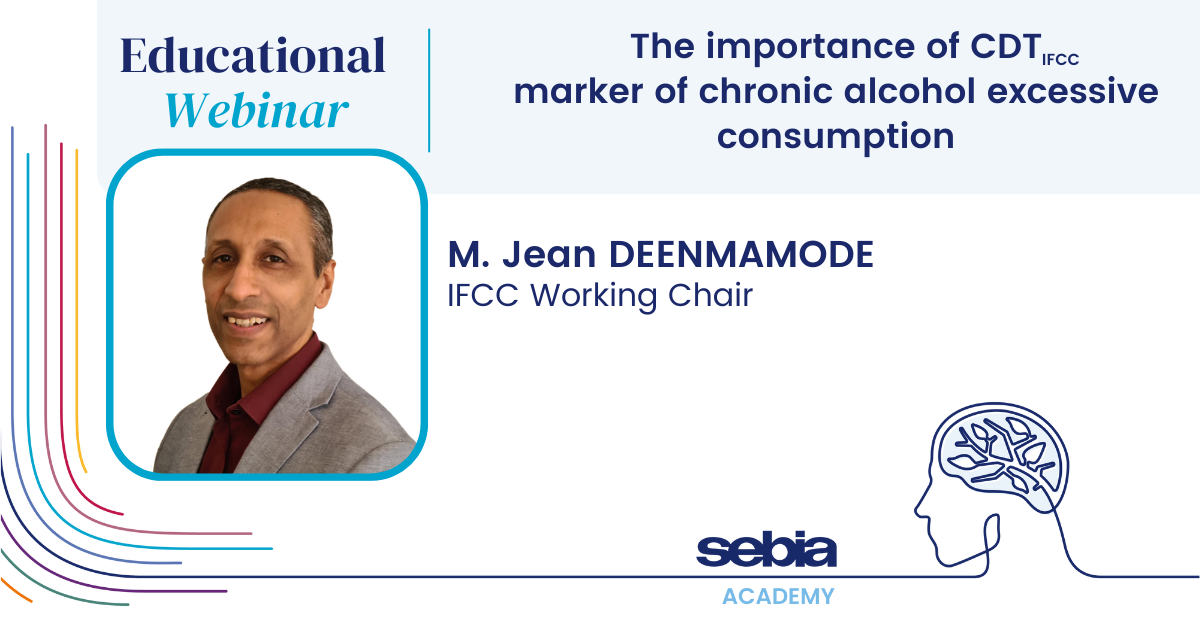
Educational Webinar with M. Jean Deenmamode, IFCC Working Group Chair
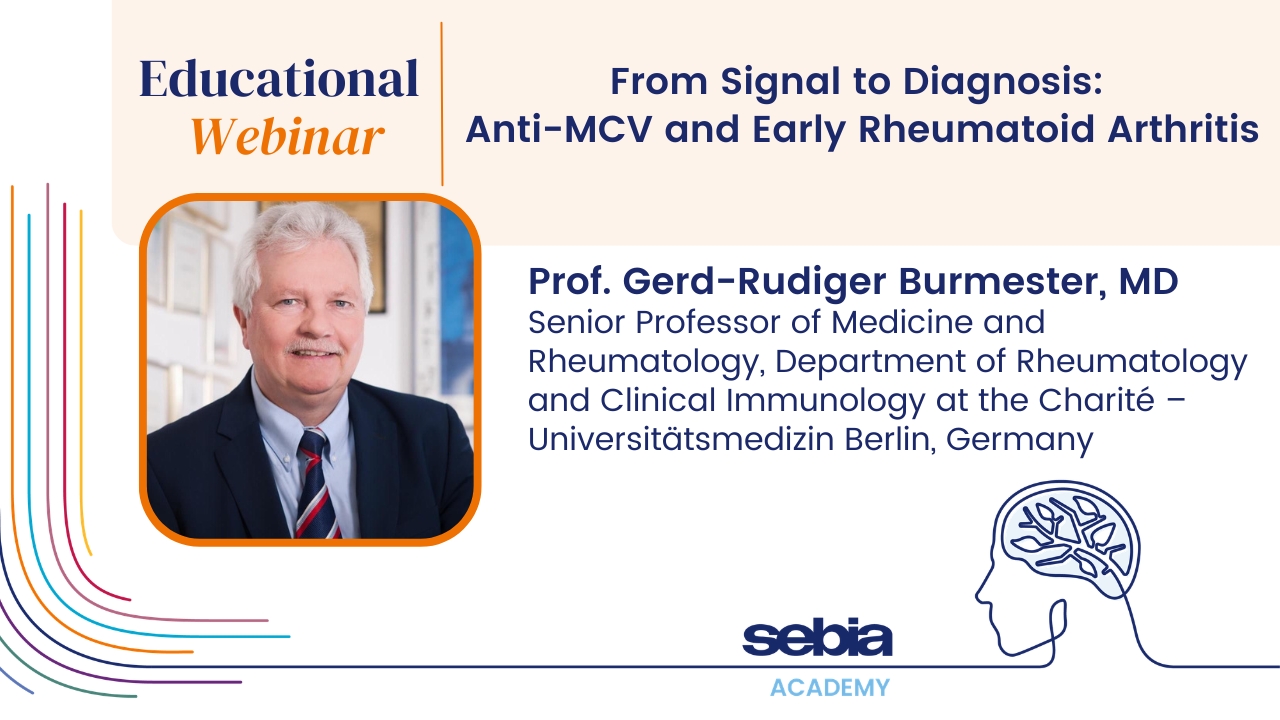
Educational Webinar with Gerd-Rüdiger Burmester, MD & Roberto Fiorillo
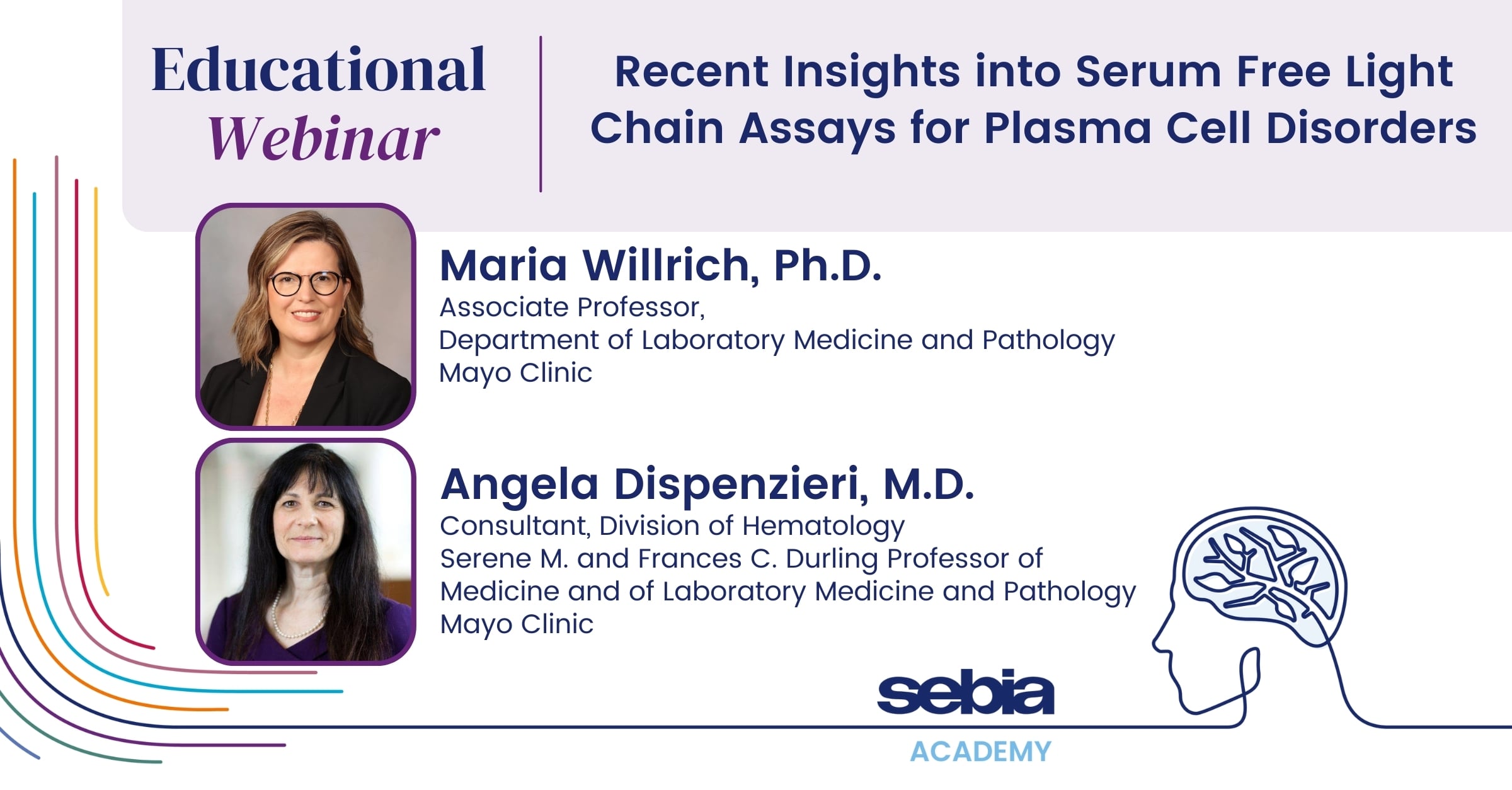
Educational Webinar with Dr. Maria Willrich & Dr. Angela Dispenzieri
This section contains information intended for wide distribution and may therefore contain product details or information that is not available or valid in your country. Please contact your local Sebia representative. Information intended for healthcare professionals. Carefully read the instructions in the reagent package inserts and instrument manuals.