Select Your Region

We noticed you visit this page from United States. Please select your preferred region to continue

skip to content

Country Selector

Based on your location

Europe

North America

Latin America

Asia-Pacific

Healthcare Professional Verification

This section contains medical information for licensed healthcare professionals only. Please confirm your professional status to continue.

Current Status of Detecting Monoclonal Antibodies and Free Light Chains in Serum

This webinar is presented in English.

Publié: 8/31/2023 | Modifié: 8/19/2026

Abstract

Testing for abnormal immunoglobulins was based previously on serum electrophoresis and immunofixation only. In the last years, however, free light chain (FLC) testing in serum became one important pillar in the diagnosis and monitoring of Multiple Myeloma and related disorders such as Amyloidosis, most of these diseases occurring in older patients. In particular, the ratio of κ FLCs to λ FLCs became pivotal in the diagnosis, monitoring, and rule-out of patients with suspected myeloma. The challenge of this serum testing is the heterogeneity of free light chains and other methodical issues of testing which challenge in particular FLC tests based on turbidimetry and nephelometry.

The other challenges arise from the accumulation of FLC in serum due to the impaired excretion of FLC in patients with altered renal function – and renal function will decrease with age physiologically. Since elevated FLC will damage the kidneys, the establishment of reference ranges is challenging, and adequate reference ranges are necessary to obtain good discrimination between patients and normal (healthy) subjects. This webinar will describe the laboratory tests currently used and will suggest methods to establish reference ranges that allow the optimized use of FLC assays.

What will you learn?

  • Understand the clinical role of serum free light chain (FLC) testing

    Learn how κ and λ free light chains, together with serum electrophoresis and immunofixation, support the diagnosis, monitoring, and exclusion of multiple myeloma, amyloidosis, and related plasma cell disorders.

  • Identify analytical challenges in FLC measurement

    Explore the impact of free light chain heterogeneity, antigen excess, and methodological limitations associated with nephelometric and turbidimetric assays.

  • Optimize FLC result interpretation

    Understand how renal impairment affects FLC concentrations and discover approaches for establishing appropriate reference ranges to improve discrimination between healthy individuals and patients with monoclonal gammopathies.

Free light chains quantification by ELISA has advantages : automation, no Ag excess issue, no overestimation of polymerized samples, fewer retest and good linearity with the dilutions
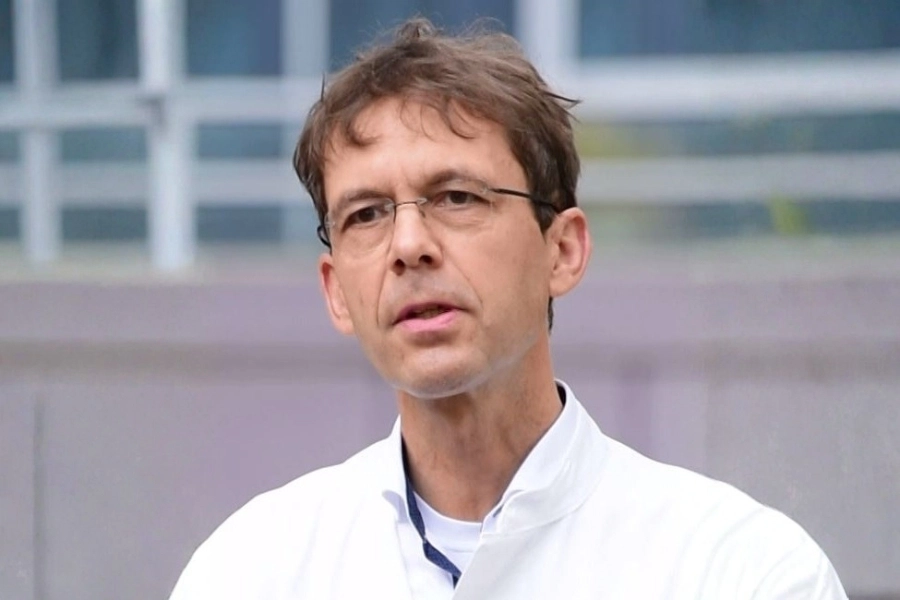
Matthias Orth, MD, PhD - Director, Institute for Laboratory Medicine

About Matthias Orth, MD, PhD

Matthias Orth received his training in Clinical Pathology at the universities of Freiburg and Magdeburg (Germany). From 1994-1997 he worked as a postdoctoral fellow at the Gladstone Institutes (GICD) of the University of San Francisco (UCSF). After his employment at the Free University Berlin and at Leipzig University, he became director of the Institute of Laboratory Medicine at Marienhospital Stuttgart in 2004. He is lecturer at the University of Heidelberg, Medical Faculty of Mannheim. He is active in the German Society of Laboratory Medicine as well as in IFCC, with a research focus on laboratory management. Very recently, he became chair of the Task Force Direct to Consumer testing of EFLM (TF-DTCT).

Matthias Orth, MD, PhD

Test associated with this resource

Deepen your expertise with additional webinars

This section contains information intended for wide distribution and may therefore contain product details or information that is not available or valid in your country. Please contact your local Sebia representative. Information intended for healthcare professionals. Carefully read the instructions in the reagent package inserts and instrument manuals.