Understand the laboratory approach to monoclonal gammopathy screening
Learn how serum and urine testing panels are used to detect and characterize monoclonal proteins.

This webinar is presented in English.

Monoclonal gammopathies (MGs) comprise a broad set of diseases involving the abnormal clonal proliferation of plasma cells. Treatments for MGs range for watchful monitoring to multidrug chemotherapeutic regimens and bone marrow transplant.
The clinical laboratory plays a central role in guiding these therapeutic decisions by performing a number of assays that detect monoclonal proteins within the patient’s blood or urine.
These assays are typically performed as a panel or as part of a reflexive algorithm to improve the accuracy and information yield. However, the complexity of these algorithms requires careful coordination between the medical technologists and the reviewing pathologist. This presentation will cover our institutional experience developing and adopting a computer-based workflow for coordinating and interpreting MG screening panels within the Phoresis (Sebia) computer application.
Learn how serum and urine testing panels are used to detect and characterize monoclonal proteins.
Discover how coordinated testing strategies improve diagnostic accuracy and clinical decision-making for plasma cell disorders.
Understand how digital tools and computer-based workflows can enhance collaboration between medical technologists and pathologists for efficient MG screening and reporting.
We wanted to improve our efficiency by transitioning away from a legacy paper-driven workflow to a new digital-based workflow
Mark A. Zaydman, M.D, Ph.D., is a clinical pathologist and an Assistant Professor of Pathology and Immunology at Washington University School of Medicine in St. Louis and affiliated with Barnes-Jewish Hospital. His primary clinical focus is on clinical informatics and the application of data analytics to improve laboratory test utilization and to support clinical decisions. He also serves as medical director over monoclonal gammopathy diagnostics within the core laboratories of Barnes-Jewish Hospital.
Dr. Zaydman received a BSE in Biomedical Engineering from Case Western Reserve University in Cleveland, Ohio before moving to Washington University in St. Louis to pursue his graduate training in Biomedical Engineering and in Medicine. Drawing on his expertise in engineering, medicine, computer science, and clinical pathology, his clinical research focuses on applications of data science to make the laboratory practice more efficient and reliable.

Educational Webinar with M. Jean Deenmamode, IFCC Working Group Chair

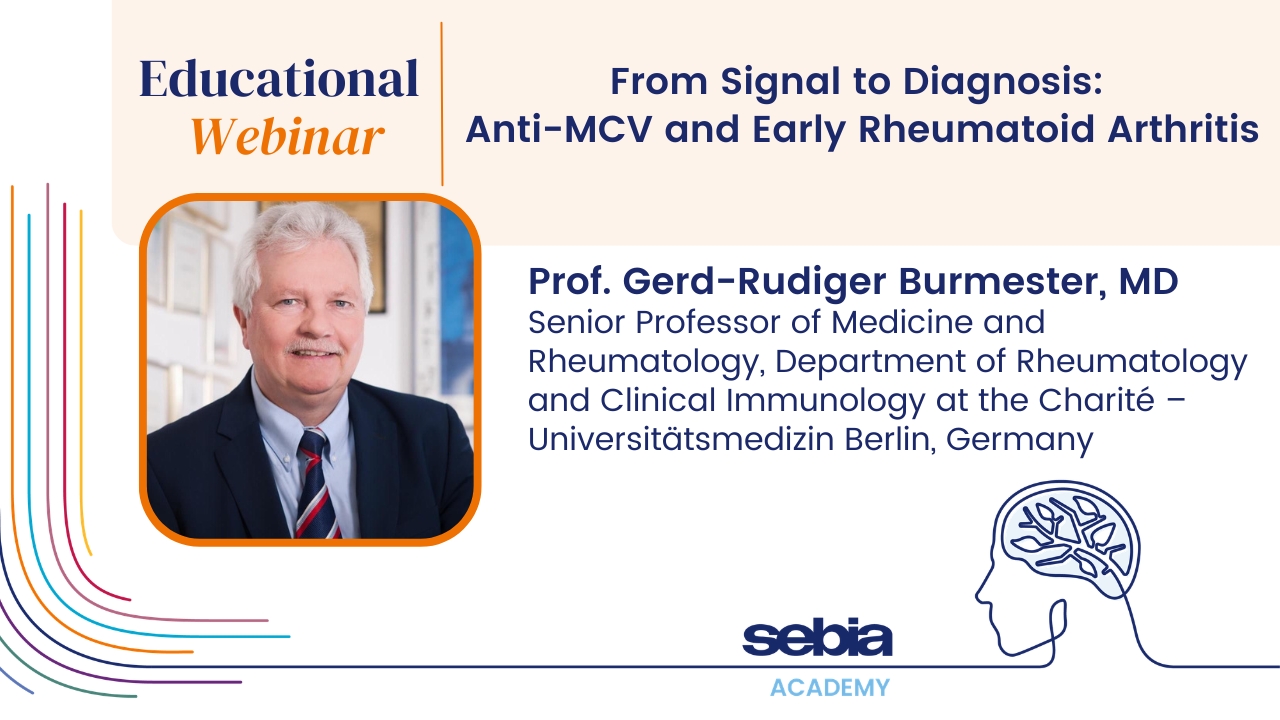
Educational Webinar with Gerd-Rüdiger Burmester, MD & Roberto Fiorillo
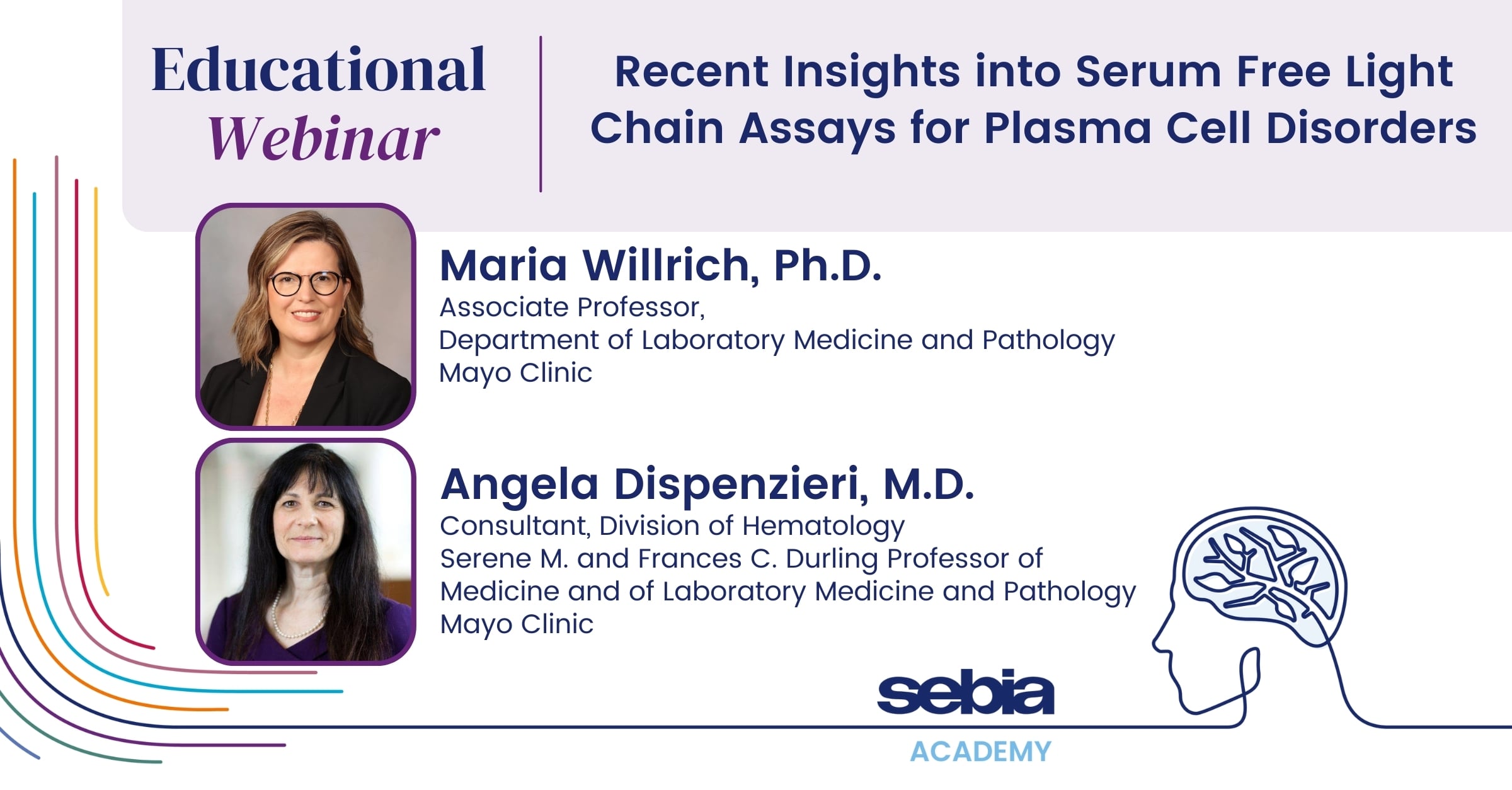
Educational Webinar with Dr. Maria Willrich & Dr. Angela Dispenzieri
This section contains information intended for wide distribution and may therefore contain product details or information that is not available or valid in your country. Please contact your local Sebia representative. Information intended for healthcare professionals. Carefully read the instructions in the reagent package inserts and instrument manuals.