
Select Your Region

We noticed you visit this page from United States. Please select your preferred region to continue

skip to content

Country Selector

Based on your location

Europe

North America

Latin America

Asia-Pacific

Alpha-1 Antitrypsin Deficiency

A genetic disease with significant underdiagnosis.

Alpha‑1 Antitrypsin Deficiency is a common inherited disorder characterized by a quantitative and/or qualitative deficiency of the protease inhibitor α1‑antitrypsin (AAT). Individuals with AAT deficiency are at increased risk of developing chronic obstructive pulmonary disease (COPD) and chronic liver disease.

Published date: 3/8/2021 | Modified date: 6/4/2026

What is Alpha-1 Antitrypsin Deficiency (AATD)?

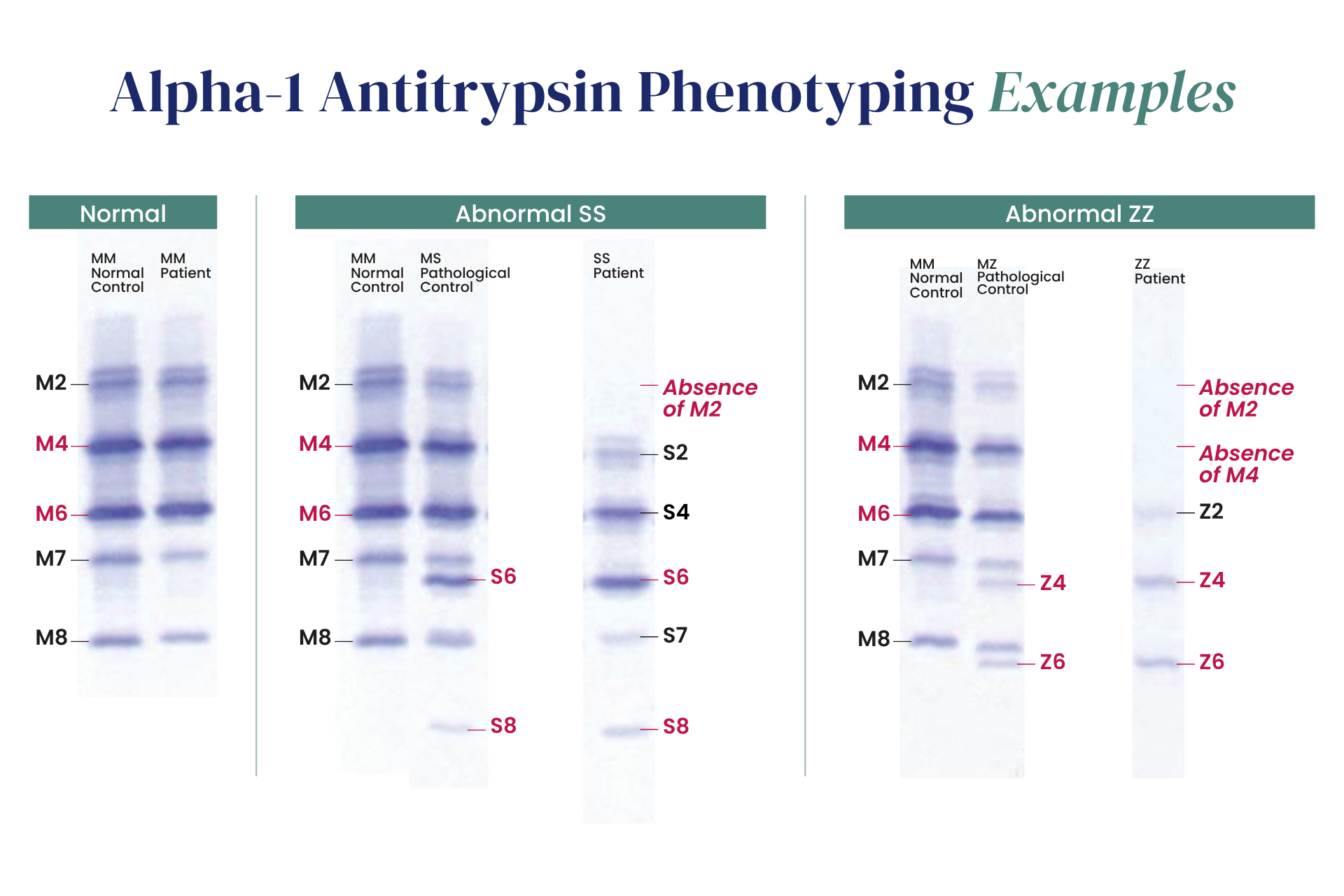
The AAT gene is highly polymorphic, with more than 100 described variants in addition to the normal M allele. Among these, the S and Z alleles are the most common pathogenic forms, with the Z variant associated with the most severe clinical impact in individuals with alpha‑1 antitrypsin deficiency.

People carrying the MZ or MS genotypes are generally considered carriers and are not typically at increased risk for lung or liver disease. In contrast, individuals with ZZ or SZ genotypes are classified as AAT‑deficient, presenting moderate to severe deficiency and a significantly higher risk of clinical manifestations.

Alpha‑1 Antitrypsin Deficiency (AATD) is a rare hereditary disorder characterized by reduced levels of alpha‑1 antitrypsin, which can lead to serious lung and liver disease in both children and adults.

Key figures

  • 1 over 2 500

    individuals with European ancestory are affected by AAT deficiency

  • 90%

    remain undiagnosed

  • 3.4 million

    individuals are affected by AAT deficiency

How do we diagnose AATD?

  • Item 1

    Pulmonary manifestations of Alpha‑1 Antitrypsin Deficiency (AATD) typically appear after the age of 40, whereas hepatic involvement can occur much earlier, including in childhood. Early identification is essential, as disease progression can be slowed through timely therapy and by reducing exposure to aggravating factors. Identifying individuals at risk for AATD‑related lung and liver damage and enrolling them promptly in appropriate management programs is therefore critical.Although clinical guidelines recommend testing all patients with COPD or unexplained bronchiectasis for AATD, up to 90% of individuals with severe deficiency remain undiagnosed, often for years after symptom onset.Several diagnostic methods are available. The most widely used is protein phenotyping by IsoElectric Focusing (IEF). AAT concentrations can also be measured by nephelometry or immunoturbidimetry, but levels may fluctuate due to unrelated inflammatory or physiological conditions, which can obscure true deficiency. Genotyping assays can detect common deficiency alleles such as S and Z, but may miss other pathogenic variants, leaving some at‑risk individuals unidentified.
    Item 1

Knowledge & Science

No content available.

Tests for diagnosing Alpha-1 Antitrypsin Deficiency

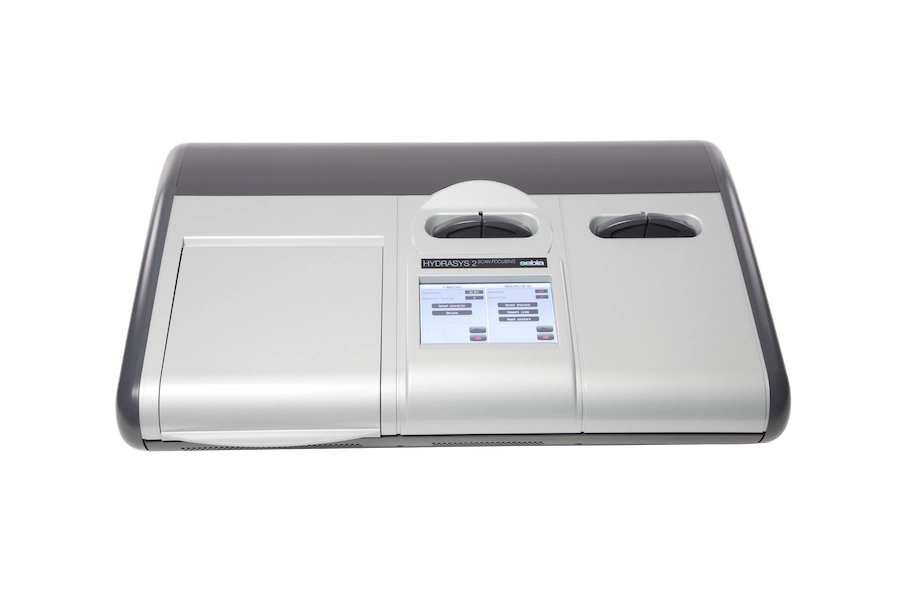
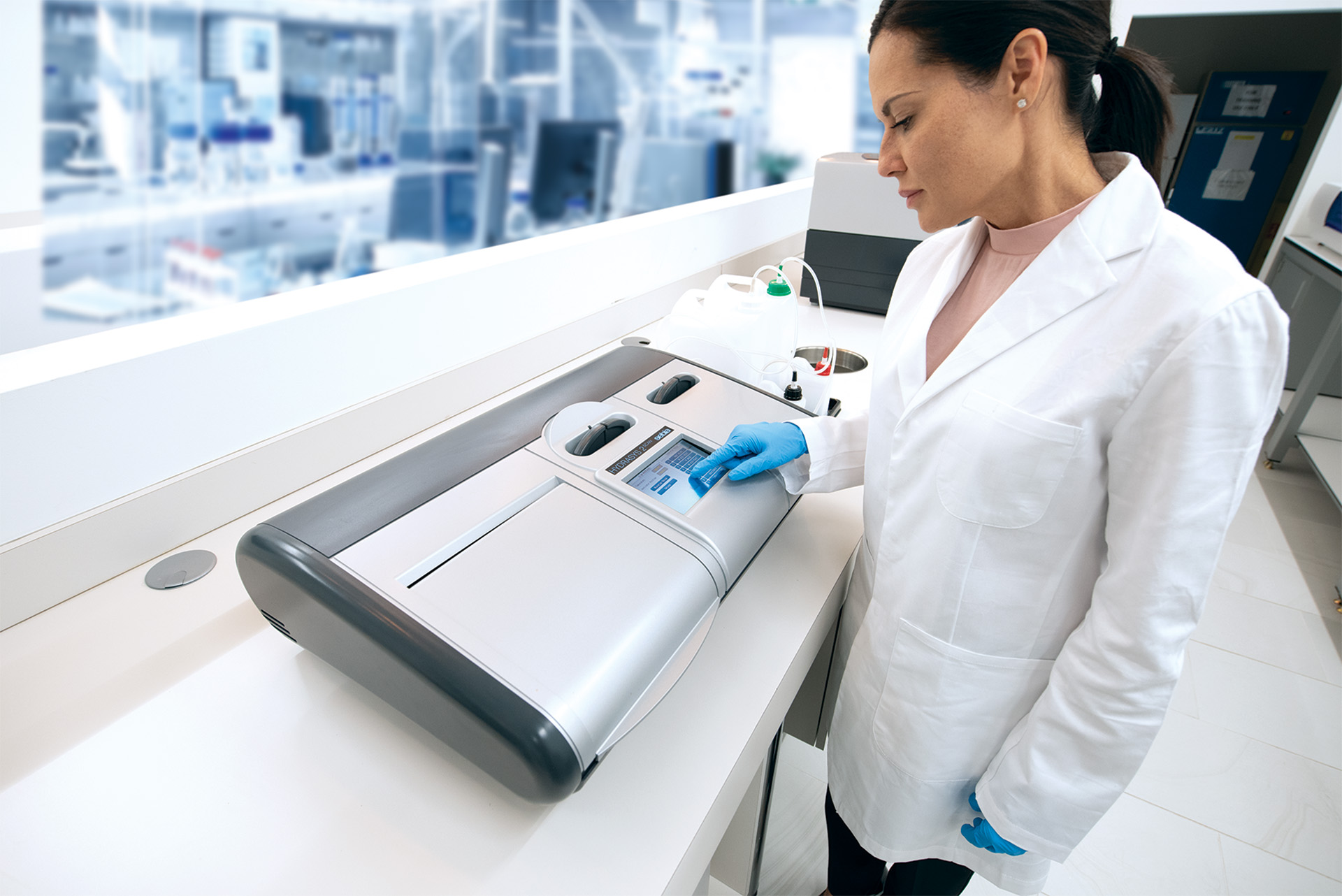
Instruments for diagnosing Alpha-1 Antitrypsin Deficiency

a) Slev PR, Williams BG, Harville TO, Ashwood ER, Bornhorst JA. Efficacy of the detection of the alpha1-antitrypsin "Z" deficiency variant by routine serum protein electrophoresis. Am J Clin Pathol. 2008 Oct;130(4):568-72. doi: 10.1309/JWEWE4QRQKJ5EJEU. PMID: 18794049.

b) Rahaghi FF, Sandhaus RA, Brantly ML, Rouhani F, Campos MA, Strange C, Hogarth DK, Eden E, Stocks JM, Krowka MJ, Stoller JK. The prevalence of alpha-1 antitrypsin deficiency among patients found to have airflow obstruction. COPD. 2012 Aug;9(4):352-8. doi: 10.3109/15412555.2012.669433. Epub 2012 Apr 16. Erratum in: COPD. 2013 Aug;10(4):555. Brantly, Mark L [added]; Rouhani, Farshid [added]; Campos, Michael A [added]. PMID: 22506682.

c) Greene DN, Elliott-Jelf MC, Straseski JA, Grenache DG. Facilitating the laboratory diagnosis of α1-antitrypsin deficiency. Am J Clin Pathol. 2013 Feb;139(2):184-91. doi: 10.1309/AJCP6XBK8ULZXWFP. PMID: 23355203.

d) Balduyck M, Odou MF, Zerimech F, Porchet N, Lafitte JJ, Maitre B. Diagnosis of alpha-1 antitrypsin deficiency: modalities, indications and diagnosis strategy. Rev Mal Respir. 2014 Oct;31(8):729-45. doi: 10.1016/j.rmr.2014.06.001. Epub 2014 Jul 3. PMID: 25391508.

e) Akbas N, Gonzalez G, Buffone GJ, Grenache DG, Devaraj S. A Library of Rare α1-Antitrypsin (AAT) Variant Phenotypes to Aid in the Diagnosis of AAT Deficiency. Am J Clin Pathol. 2016 Sep;146(3):289-93. doi: 10.1093/ajcp/aqw112. PMID: 27543976.

f) Franciosi AN, Carroll TP, McElvaney NG. Pitfalls and caveats in α1-antitrypsin deficiency testing: a guide for clinicians. Lancet Respir Med. 2019 Dec;7(12):1059-1067. doi: 10.1016/S2213-2600(19)30141-9. Epub 2019 Jul 16. PMID: 31324540.

This section contains information intended for wide distribution and may therefore contain product details or information that is not available or valid in your country.

Please contact your local Sebia representative. Information intended for healthcare professionals.
Carefully read the instructions in the reagent package inserts and instrument manuals.

AAT Deficiency diagnosis | Sebia