Turn-Around Time
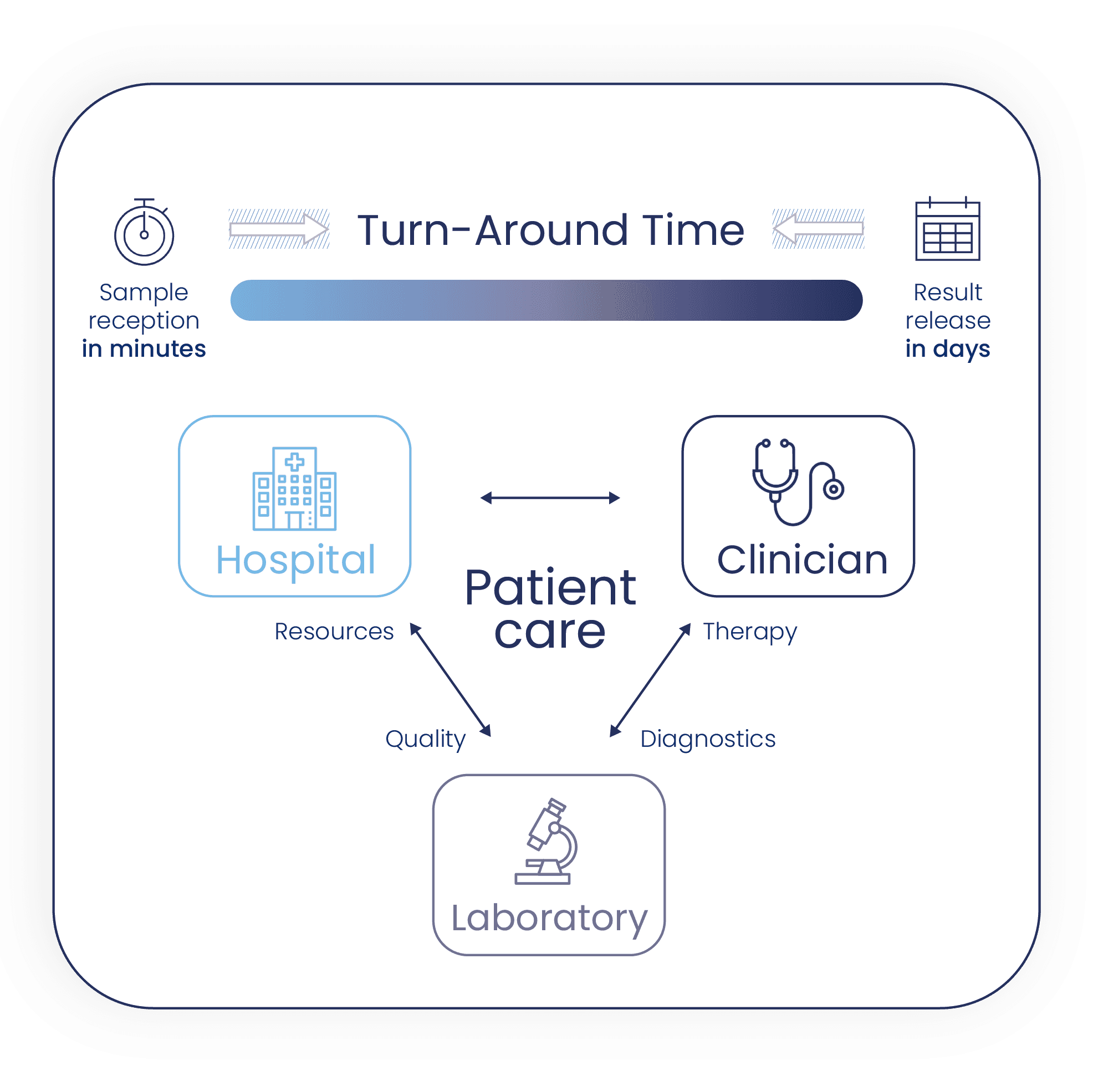


The clinical laboratory environment has undergone profound changes in recent years. Advances in innovation, automation, IT connectivity, and logistics have led to the emergence of increasingly large laboratories and laboratory networks focused on operational efficiency. In a highly competitive landscape, these organizations continuously seek to optimize their resources and implement cost-effective solutions.
In countries where clinical laboratories have not yet experienced this consolidation trend, progress in analytical technologies and data management remains a key driver for improving patient care and supporting market development.
At the same time, reference hospital and university laboratories are facing both rapid medical advances and increasing financial constraints. These pressures require innovative technical and managerial approaches to maintain a high standard of patient care.
Across the entire healthcare ecosystem, one common objective unites all stakeholders: the ongoing pursuit of cost reduction.
The market offers a wide range of innovative technical and IT solutions designed to reduce costs and improve laboratory performance. However, the real challenge is not the availability or quality of these solutions, but rather how they are implemented and integrated. Key questions arise for laboratory managers:
Addressing these critical questions is a key responsibility for laboratory managers and can be particularly challenging. Sebia Lean Service, together with Sebia’s product solutions and scientific expertise, helps laboratory managers achieve process excellence and operational efficiency to effectively tackle these challenges.
The primary mission of laboratories is to deliver high-quality, reliable, and timely clinical diagnostic results to healthcare professionals and patients while operating within budget constraints.
Achieving this objective ultimately means striving for efficiency—an outcome that Lean management approaches are specifically designed to support by focusing on quality while using only the necessary resources.
A key principle of Lean is to focus resources on the laboratory’s core mission while identifying and eliminating non-value-added activities. This approach leads to improved operational performance.
Sebia Lean Service is designed to improve laboratory performance through customized product and management solutions. It is structured as a modular and scalable service offering.
Key benefits:
Key benefits:
Key benefits:
Key benefits:
Key benefits:
Deliverables:
Understand your needs and constraints to provide you with the most suitable and integrated solution.
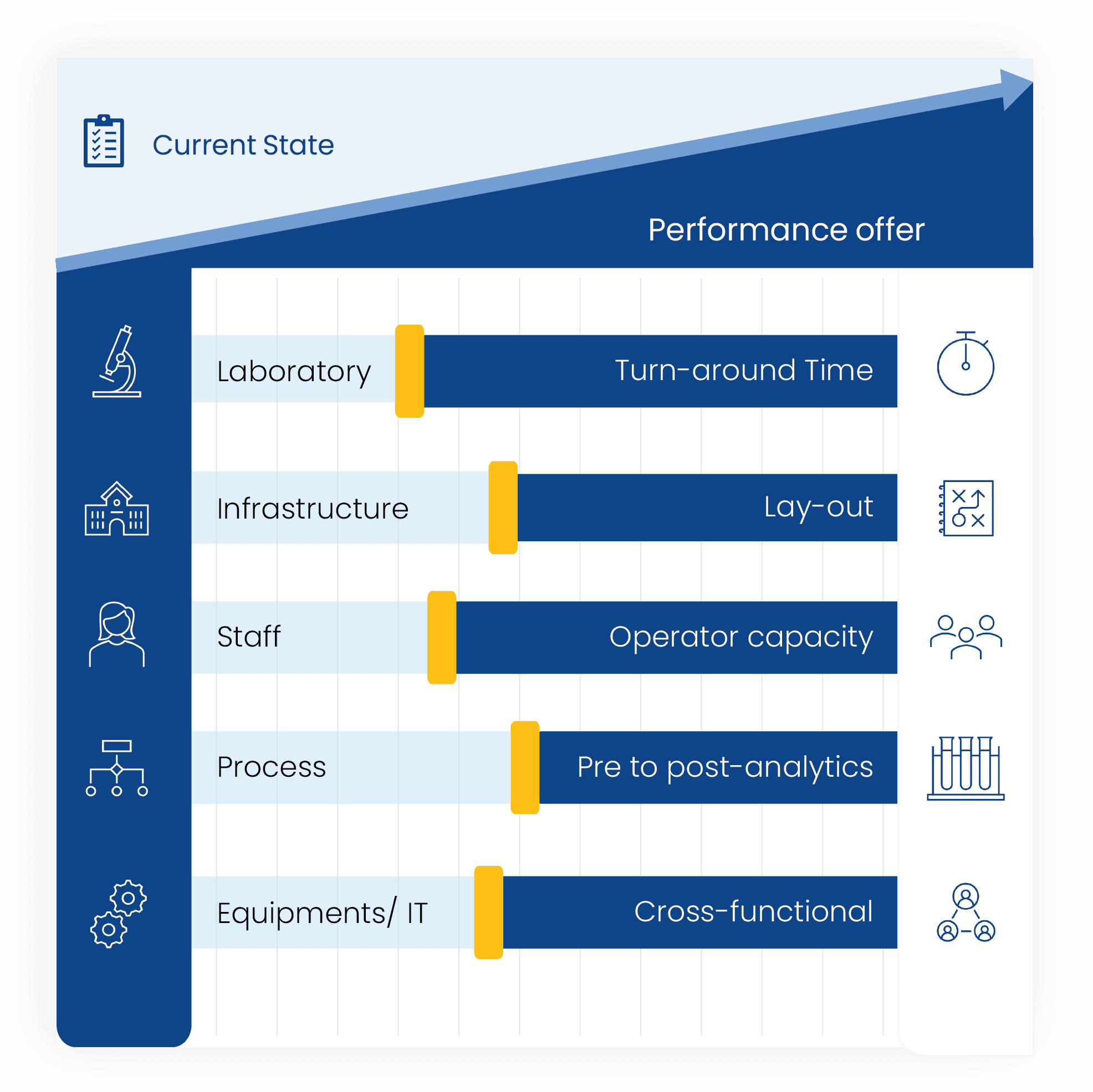
By doing a comprehensive performance assessment at your lab with our Lean Service we can propose to you a fully integrated solution that will impact positively your TAT and improve the patient care.
In some cases, stand-alone solutions may simply become an additional complexity layer within the already complex laboratory environment.
Without integration approach, a testing solution can easily turn into a problem. At a certain extend, it could even lead to a performance decrease at some labs.
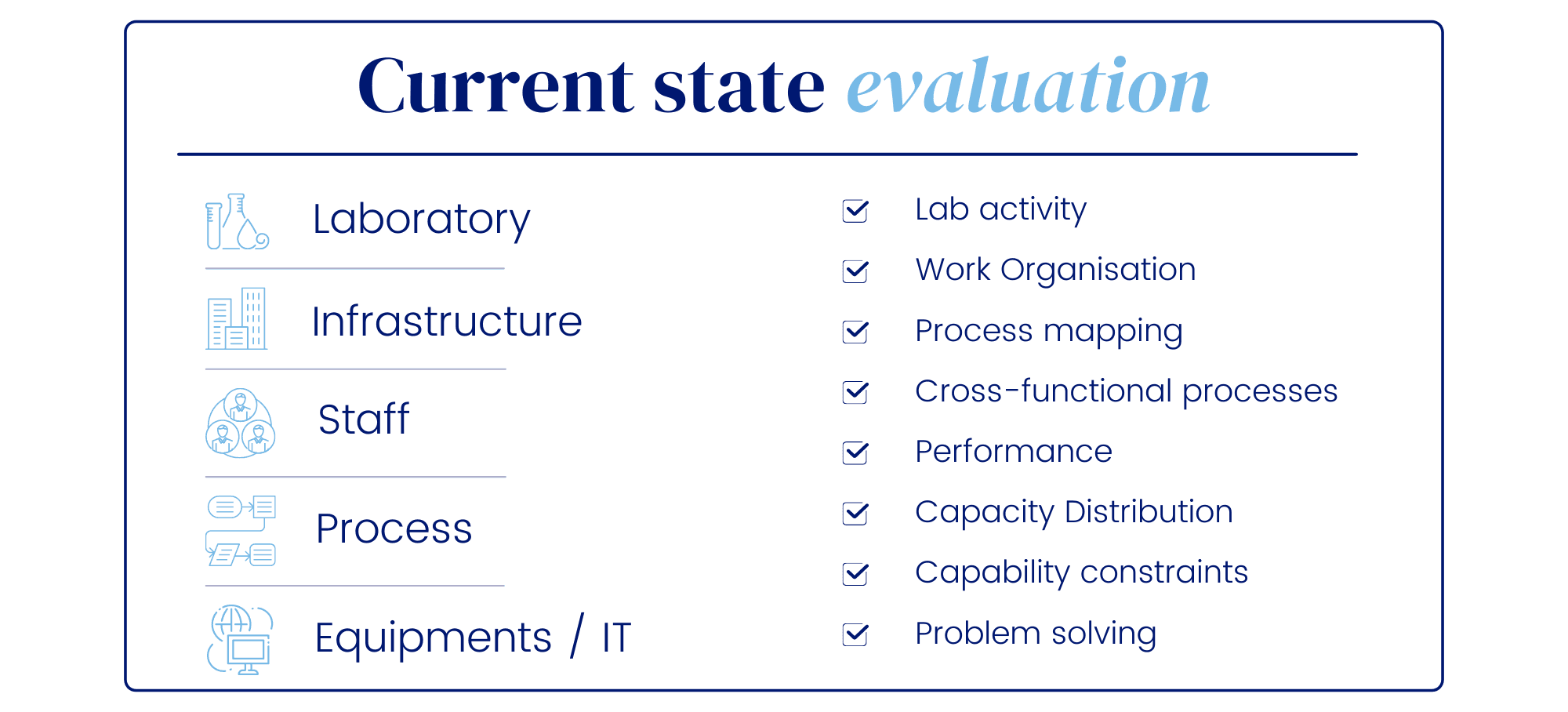
With Sebia Lean Service, we can get an in-depth understanding of your needs and constraints by performing a complete on-site evaluation.
In this way, we can offer the most suitable and fully integrated solution for your lab.
This is really what brings the efficiency that allows you to reach your performance objectives for HbA1c, Protein Electrophoresis, Immunotyping, Haemoglobin Electrophoresis, CDT testing.
Contact our Sebia Experts to help you find the solution that fits your needs.
Diabetes is identified by testing the blood sugar. This is achieved by measuring the concentration of the glucose by different analytical tests: mainly FPG (Fasting Plasma Glucose) and OGTT (Oral Glucose Tolerance test) or by measuring a specific fraction of glycated hemoglobin (HbA1c) from patient whole blood sampling.
Type 1 diabetes (previously known as insulin-dependent diabetes or juvenile diabetes) is characterized by insufficient insulin production. Type 2 diabetes (formerly known as non-insulin-dependent or adult diabetes) results from the body’s inadequate use of insulin. It is often the result of excess weight and physical inactivity.
The compact and affordable automation of Capillary Electrophoresis.
Evolution makes the difference.
A concentrate of Sebia’s expertise in a high throughput instrument.
Capillary Electrophoresis solution to meet your high capacity needs.
The high throughput solution for newborn hemoglobin disorders screening.
Large menu with high quality results on gel electrophoresis.
This section contains information intended for wide distribution and may therefore contain product details or information that is not available or valid in your country. Please contact your local Sebia representative. Information intended for healthcare professionals. Carefully read the instructions in the reagent package inserts and instrument manuals.