Understand the laboratory diagnosis of AL amyloidosis
Learn how serum free light chain testing and serum/urine immunofixation help identify amyloidogenic light chains.

This webinar is presented in English.

Light chain (AL) amyloidosis is caused by a usually small plasma cell (or B cell) clone. In the last two decades the ability of reliably detecting and measuring the amyloid monoclonal protein and biomarkers of organ damage radically changed the management of this disorders.
The measurement of circulating free light chains coupled with immunofixation of serum and urine is needed to identify the amyloid light chain at diagnosis, to assess response to treatment, and to identify relapse. More recently, evaluation of minimal residual disease in the bone marrow by next generation flow cytometry has been introduced.
Staging is based on markers of cardiac (NT-proBNP, troponin) and renal (proteinuria, eGFR) involvement, whose changes are used to evaluate response to treatment. These biomarkers have also been proposed to allow early pre-symptomatic diagnosis in patients known to have a plasma cell dyscrasia. Other biomarkers of organ dysfunction and damage, such as GDF-15, ST2, urinary albumin to creatinine ratio have been proposed. The clinical laboratory has a crucial role in screening, diagnosing, staging, and monitoring systemic AL amyloidosis.
Learn how serum free light chain testing and serum/urine immunofixation help identify amyloidogenic light chains.
Review the role of NT-proBNP, troponin, proteinuria, and eGFR in assessing organ involvement and treatment response.
Understand the value of minimal residual disease assessment by next-generation flow cytometry and emerging biomarkers such as GDF-15 and ST2.
We should diagnose AL amyloidosis, when possible, before symptoms occur
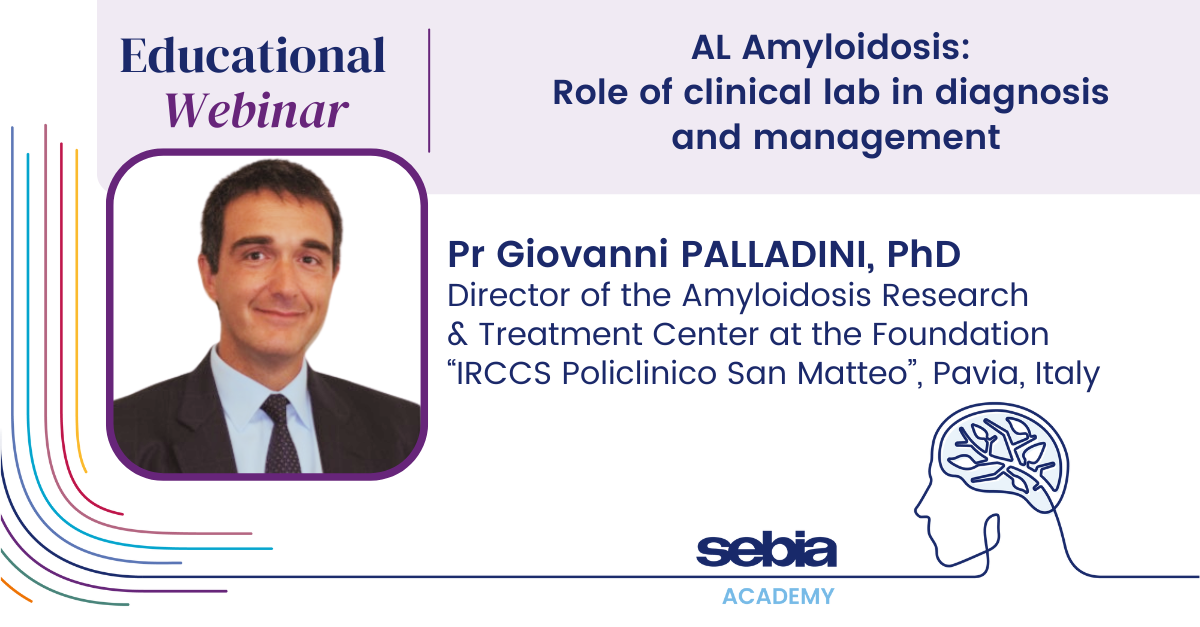
Dr. Palladini is professor of clinical chemistry at the University of Pavia and the acting director of the Amyloidosis Research and Treatment Center at the Foundation “IRCCS Policlinico San Matteo”, Pavia, Italy
Dr. Palladini contributed to the introduction of novel agents in the treatment of AL amyloidosis. His studies led to the development of several treatment regimens for AL amyloidosis and to the introduction of NT-proBNP as a marker of diagnosis, prognosis and response of cardiac involvement in this disease, and to the establishment and validation of criteria for hematologic and organ response to therapy in AL amyloidosis.

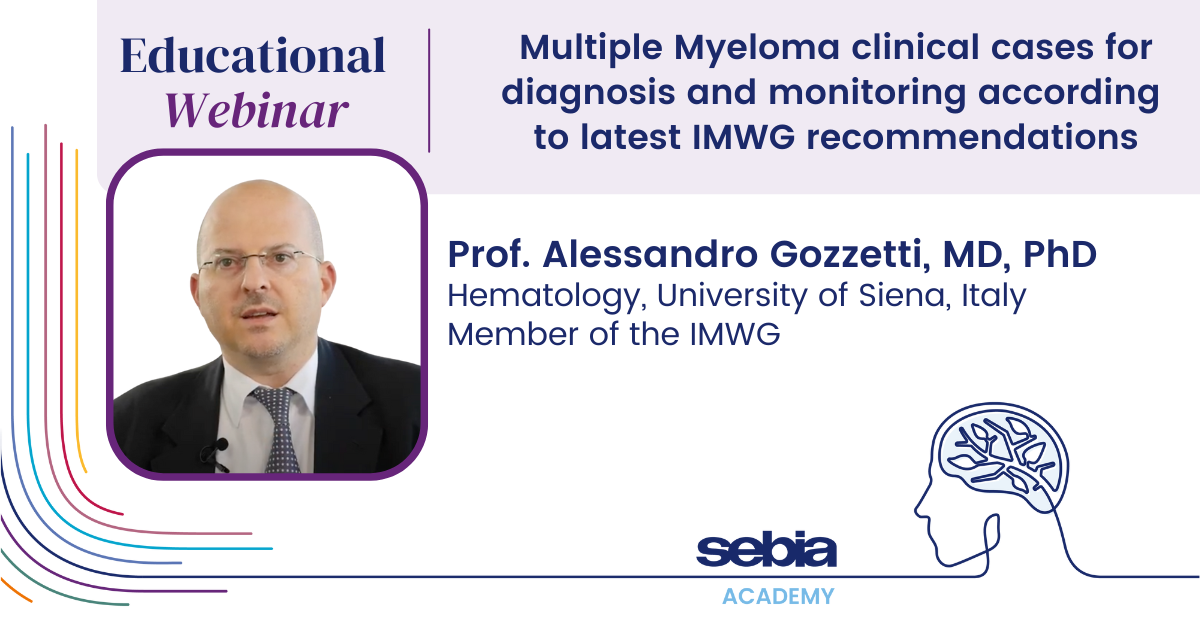
Educational Webinar with Prof. Alessandro Gozzetti, MD, PhD
Educational Webinar with Prof. Giovanni PALLADINI, PhD
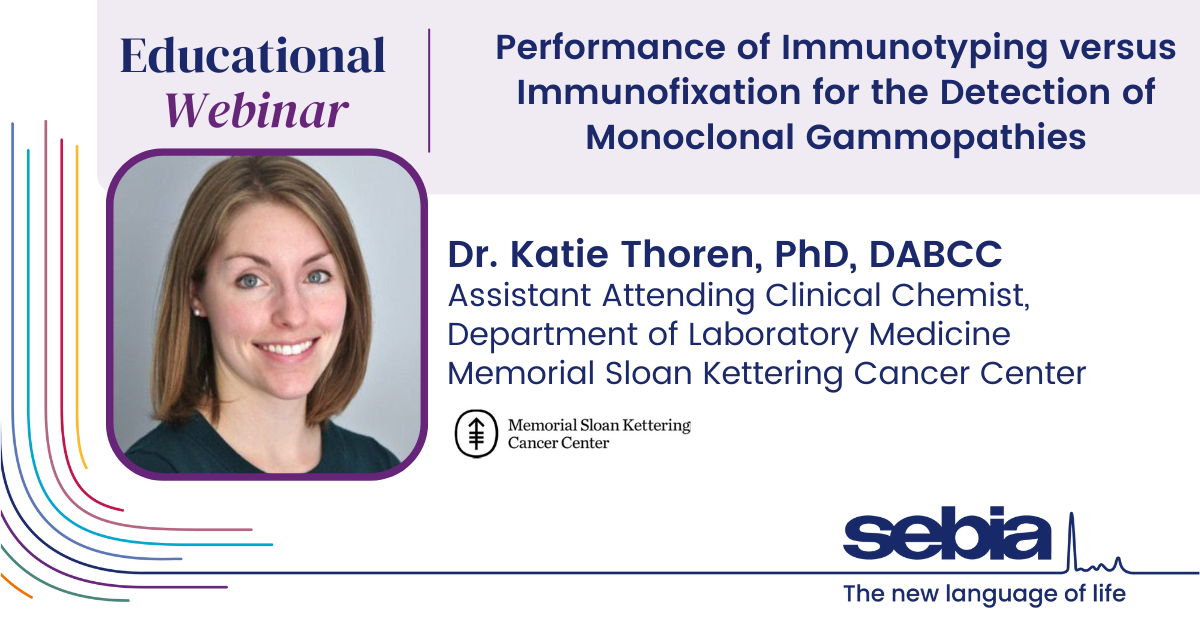
Educational Webinar with Katie Thoren, PhD
This section contains information intended for wide distribution and may therefore contain product details or information that is not available or valid in your country. Please contact your local Sebia representative. Information intended for healthcare professionals. Carefully read the instructions in the reagent package inserts and instrument manuals.